
Hair Transplant Guide
At Clinique de Monsieur, hair transplantation is a minimally invasive procedure carried out in a controlled medical environment under strict clinical protocols. Our experienced doctors carefully plan and perform each treatment to ensure the process is smooth, comfortable, and designed to fit easily into your routine. Below is a clear overview of what you should know before deciding on hair restoration.
Who Is a Candidate for a Hair Transplant?
There are many reasons why a man with thinning hair is not a good candidate for hair transplantation. Eligibility for hair transplantation is based on:
- The extent and rate of progression of your hair loss.
- The quality and quantity of your donor area
- Your age;
- Long-term hair loss patterns; and,
- Overall scalp and health status.
It is imperative to have a consultation with a hair loss specialist to determine if surgery alone, medication alone, or a combination of both is the best course of treatment for your hair loss.
Recovery and Hair Growth Timeline
The recovery process is usually quite simple. In the initial period (first few days):
- Mild redness or swelling in the treated areas may develop
- Small scabs will form around each graft (follicle) as it heals
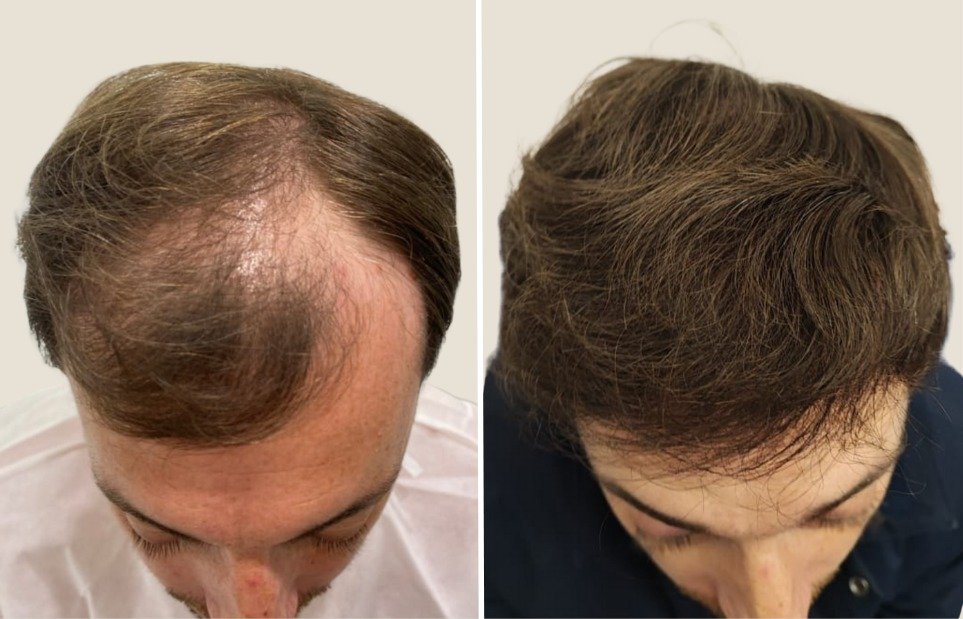
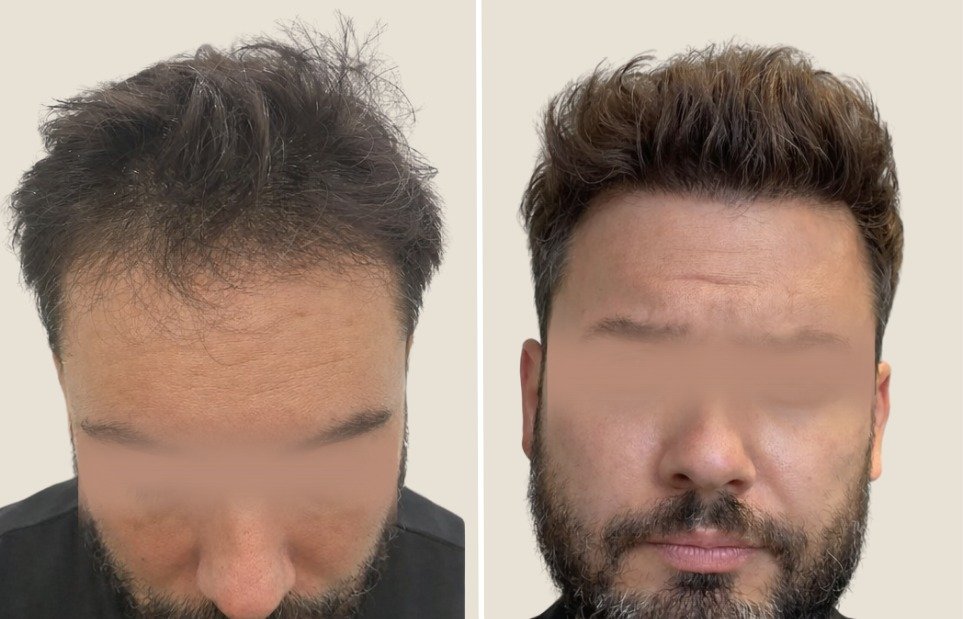
Over the next few weeks, the transplanted hairs will likely fall out (this is a common and temporary occurrence). New hair growth usually begins to appear in several months. Full results from the procedure will take approximately 8-12 months.
What to Expect During the Procedure
Hair transplantation is performed while you are awake and under local anaesthesia.
The procedure generally consists of:
- The extraction of follicular units from the donor area
- The direct placement of those follicular units into the recipient area using a Choi implanter
- A detailed design of the hairline, taking into account your facial structure
- A plan to control the density of the newly transplanted hair so that it appears natural.
Before & After Photos
Hair Transplant Journey: Step-by-Step

Phase 1 – Consultation & Design
Direct FUE builds upon the success of traditional FUE, by combining the extraction and implantation of grafts. Unlike traditional FUE where all grafts are removed first and then implanted later, Direct FUE implants the grafts directly into the scalp as they are being removed allowing for greater viability and less handling of the grafts.

Phase 2 – Extraction Phase
Once you're under local anesthesia, we will extract individual follicular units from the donor zone (back of your head), these are the hairs that are least susceptible to hair loss.

Phase 3 – Direct Implantation
We use high precision tools to place each graft individually into the recipient site with exact control over the angle, depth and direction. By performing the two steps together, we are able to maximize the chances of graft survival and mimic the natural way your hair grows.

Phase 4 – Post-Procedure Care
Following the transplant, your surgeon will provide you with detailed instructions on caring for your scalp to promote optimal healing. The swelling and redness associated with the transplant are typically mild, and most patients can resume their usual lifestyle within a short period of time. The full effects of the transplant will become visible over the course of 8-12 months as the grafted follicles mature.
FAQ
Is a hair transplant permanent?
Yes. Hair transplants carry genetic resistance to hair loss and continue to grow permanently.
Will the results look natural?
Is the procedure painful?
When can I return to work?
How long do results last?
How many hairs are implanted during a hair transplant?
At what age is hair transplantation most effective?
Book a Private Medical Consultation
The first step in any hair restoration journey is a complete medical evaluation.
In order to provide the highest level of discretion, at Clinique de Monsieur our consultations take place in a private medical environment exclusively for men. Our hair loss experts will evaluate each of your needs and create a customized plan to achieve the best results based on medical criteria and long-term planning.
