


Introduction
Why is hair loss diagnosis medically significant prior to beginning a treatment?
There are many people who treat their hair loss with either an assumption or fact. Hair loss is not a singular condition. Hair loss is a sign or symptom of multiple potential causative factors. Thus, if there is no proper medical diagnosis, even the latest treatments could potentially have limited effectiveness.
At Clinique de Monsieur, we want to emphasize that accurate diagnosis is the foundation upon which successful hair replacement is achieved. Additionally, due to advancements in techniques such as Direct FUE, the grafts are being placed by using the Choi implanter, thus providing for a high degree of precision, natural appearance, and longevity.
This paper will discuss how specialists make diagnoses regarding hair loss, what elements are evaluated when making those diagnoses, and how the diagnosis affects the outcome of treatment.

What Is a Medical Diagnosis of Hair Loss?
What is involved in a medical diagnosis of hair loss?
A medical diagnosis of hair loss is a formal method of determining the actual reason why a person’s hair loss occurred. The specialist examines the scalp, the hair follicles, and overall physical state of the individual.
Why is this process so crucial?
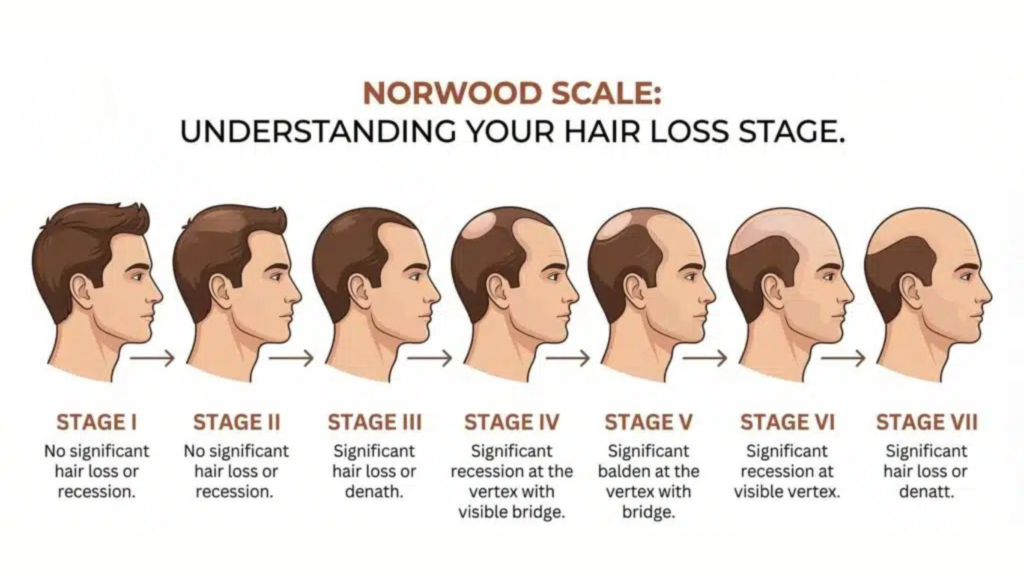
Due to varying degrees of hair loss among different individuals, it is important to determine if the loss was genetically inherited, hormonally related, or temporarily caused.
Diagnosis will help accomplish several primary goals including:
- Determination of the type of hair loss
- Evaluation of the extent of hair loss
- Development of an appropriate treatment plan
How Crucial Is Proper Diagnosis?
What happens if hair loss is incorrectly diagnosed?
If hair loss is inaccurately diagnosed, then any treatment provided could be either unsuccessful or possibly counterproductive. For example, using only topical products to treat genetic hair loss would not produce lasting results.
How does accurate diagnosis increase the likelihood of positive outcomes?
An accurate diagnosis ensures that treatment addresses the underlying cause of hair loss rather than merely addressing symptoms. Therefore, patients experience improved results which are longer lasting.
Some benefits include:
- Avoidance of unnecessary treatments
- Lower long-term costs
- Increased chances for favorable treatment results
What Causes Hair Loss That Needs to Be Diagnosed
What are common reasons for hair loss?
Hair loss can occur due to numerous possible factors. In order to select a treatment option, it is essential to know the cause of hair loss.
Which conditions are commonly diagnosed?
Causes often diagnosed include:
- Androgenetic alopecia or male pattern baldness
- Hormonal imbalance particularly sensitivity to DHT
- Stress related excessive shedding
- Nutrient deficiencies
- Other underlying health conditions
Why is DHT so important?
DHT plays an extremely important role in hereditary hair loss. It reduces the size of hair follicles over time causing them to become smaller and thinner until they eventually stop producing new hairs. This process is called miniaturization.
How Do Doctors Diagnose Hair Loss?
What steps are involved in making a diagnosis of hair loss?
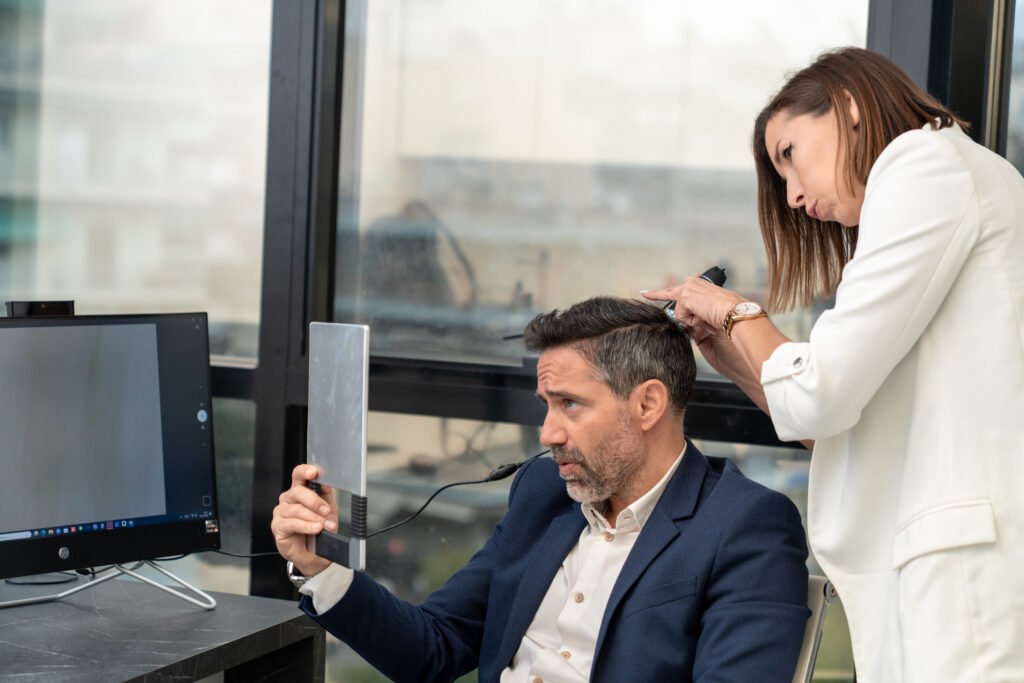
Making a medical diagnosis of hair loss is performed using a logical step by step process. To guarantee accuracy, doctors consider many different criteria.
Visual examination of the scalp
To start, doctors visually inspect the scalp and evaluate hair density, pattern of hair loss, and condition of the scalp.
Assessment of patient’s history
After examining the scalp, doctors evaluate the patient’s past medical history. Some examples include:
- Family history of hair loss
- Past illnesses or other health problems
- Changes made to diet or exercise routine
- Any recent illness or injury
Diagnostic testing methods
In some situations, doctors may need to perform further tests to gather additional information about the patient:
- Trichoscopy which examines details of follicles
- Blood tests which evaluate nutrient deficiencies or hormone balances
What information will the full evaluation provide?
The typical evaluation process usually consists of:
- Examining the scalp
- Evaluating hair density
- Identifying patterns of hair loss
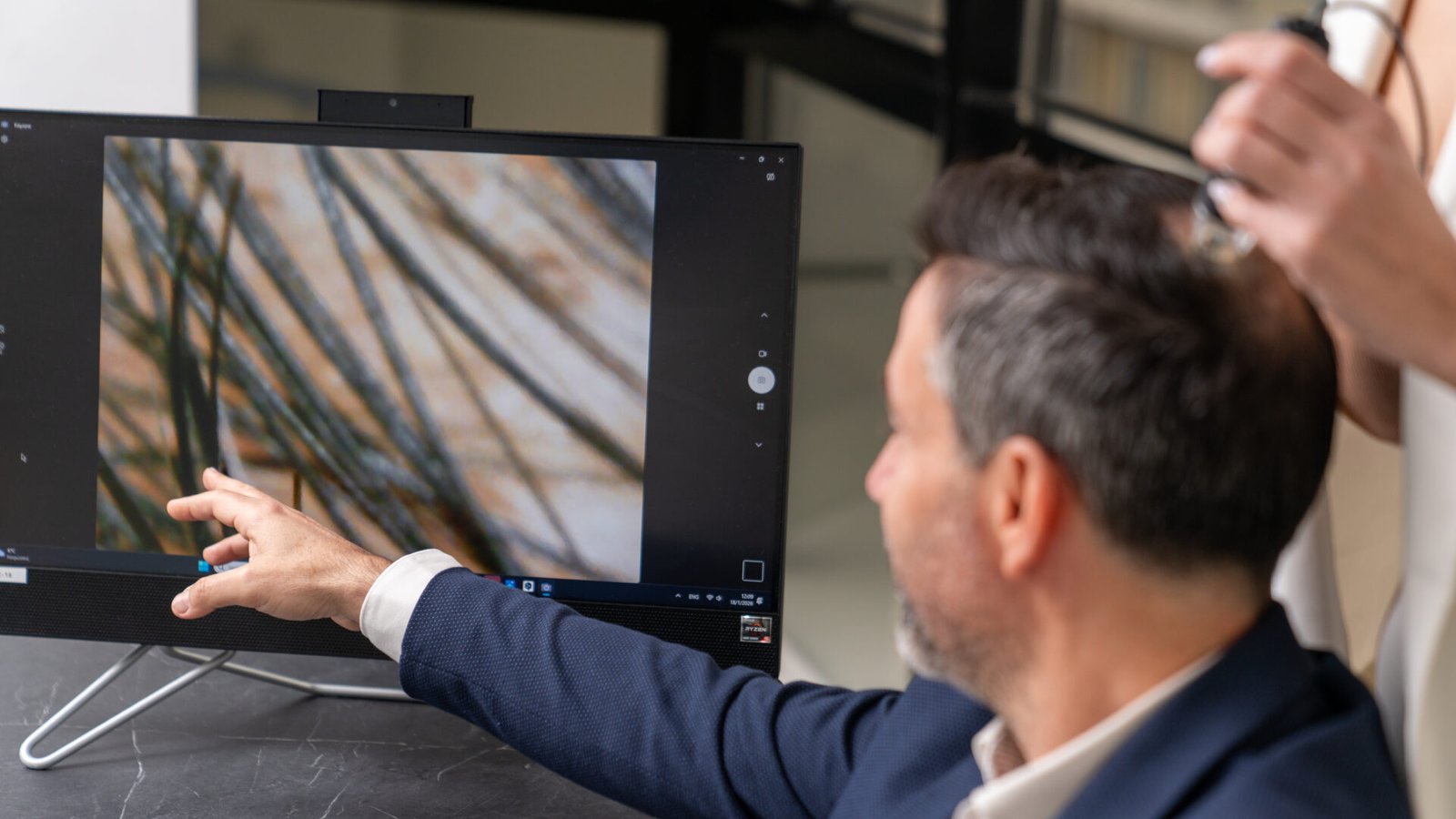
What Is Trichoscopy and Why Is It So Important
What is trichoscopy?
Trichoscopy is a non-invasive technique for diagnosing hair loss that uses a highly magnified microscope to evaluate the scalp and hair follicles.
Why is trichoscopy vital in diagnosis?
Using trichoscopy helps doctors see details that are not observable with the naked eye, improving the accuracy of their diagnosis.
What can trichoscopy detect?
- Miniaturization of follicles
- Abnormalities in hair shafts
- Scalp disorders
Thus, trichoscopy can greatly assist in distinguishing between various forms of hair loss.
How Does Diagnosis Impact Treatment Planning?
Does treatment depend on diagnosis?
Yes, treatment options are based solely upon the diagnosis. If a doctor does not know the cause of hair loss, then there is no way to develop an effective treatment plan.
Treatment categories
Non-surgical treatments
Non-surgical treatments are suitable for early stages and include:
- Medications that reduce levels of DHT
- Topical products designed to stimulate hair growth
While these treatments slow down the rate of hair loss, they do not restore lost hair.
Surgical treatment using Direct FUE
For more advanced degrees of hair loss, surgical treatment offers a long-term solution. Through Direct FUE, healthy follicles are extracted from a donor site and placed into areas where hair has been lost. Grafts are being implanted by using the Choi implanter, providing optimal placement angle and direction and reduced trauma to the scalp, improving survival rates of grafted hairs.
Who Should Have Surgery?
Who is a suitable candidate for hair transplant?
Not all patients require surgery. However, hair transplants are advisable in specific situations.
When is it necessary?
- Advanced cases of hair loss
- Stable donor region
- Unfavorable response to non-surgical therapies
Importance of timing
Proper timing allows for better planning and more natural results.
Why Use Direct FUE Following Diagnosis
What makes Direct FUE successful?
Direct FUE provides both precision and minimal invasion. Surgeons are able to remove and place grafts with high accuracy.
How does it improve outcomes?
Grafts are being implanted by using the Choi implanter. Therefore:
- Precise placement angle and direction
- Reduced damage to the scalp
- Higher survival rate among grafted hairs
Advantages of Direct FUE
- Fast recovery time
- No visible scars
- Natural density appearance
Consequently, patients experience immediate improvement and long-term satisfaction.
Unique Features of Clinique de Monsieur Diagnostic Process
What makes our methodology unique?
At Clinique de Monsieur, we combine advanced medical analysis techniques with aesthetic precision.
How do you personalize diagnosis and treatment?
Our method includes:
- Extensive evaluation of scalp condition
- Utilization of advanced diagnostic tools
- Customized treatment plans for each patient
- Use of Direct FUE
Grafts are also being implanted by using the Choi implanter, ensuring correct placement angles and directions and optimal results in terms of appearance.
Why is customization essential?
Each person has different characteristics. Therefore, tailored approaches produce greater success than standardized methods.
Conclusion
Why is a medical diagnosis of hair loss important for achieving positive results?
It helps determine why the condition exists and enables doctors to design targeted solutions. Otherwise, treatment becomes guesswork.
Moreover, achieving optimal results depends on early detection, proper planning, and the use of advanced techniques. With Direct FUE, where grafts are being implanted with the use of Choi implanter, precision, natural appearance, and long-term success are significantly enhanced.
At Clinique de Monsieur, we focus on delivering refined, natural, and long-lasting results through personalized diagnostic processes and advanced technology.
Are you ready to understand the cause of your hair loss?
We invite you to schedule your personalized consultation and discover the most effective solution tailored to your needs with Clinique De Monsieur.