



Men that search for the best method of hair transplant, typically encounter methods such as FUE (Follicular Unit Extraction), FUT (Strip Harvesting), Direct FUE, and other variations and become overwhelmed by the sheer number of choices. To determine which method is best for you today, your hair loss pattern, donor availability, style preferences, and how you anticipate thinning in the future all play a role. Below you’ll find information on each method, who each is suited best for, and how Clinique de Monsieur considers the selection of a method for your hair transplant as part of a long term plan.
Start With Your Goal Not the Method
What is it that you want to achieve from a hair transplant?
Ask yourself: Do you want a fuller hair line, more coverage of your crown area, or more overall density for styling purposes? If you first define the outcome you wish to achieve from your hair transplant, you are less likely to select a method based upon current trends.
Typical Desired Results
Most men seek to achieve one of the following:
• Restoration of a natural appearing hair line
• Improvement in the appearance of crown thinning
• Improved appearance of the top portion of the scalp to allow for better styling and photography
• Correction of an existing transplant
Why Does My Pattern Matter?
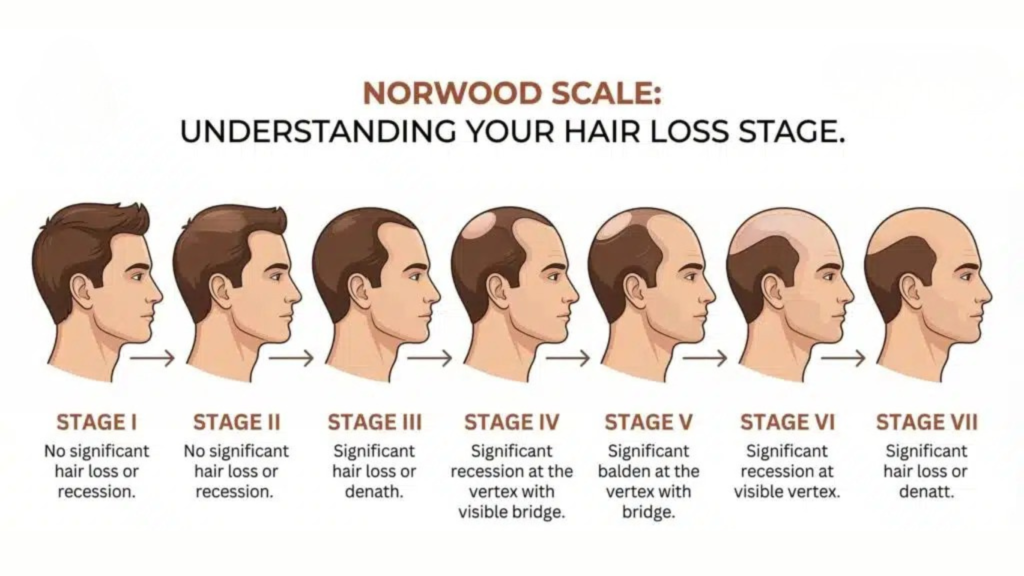
As male pattern baldness progresses, your plan must consider the potential for loss going forward. For example, if you restore a lower hair line without considering future loss, you could potentially develop an unnatural looking hair line in the future. This is why clinicians refer to male pattern baldness when discussing long term planning.
Confirm Your Stage and Donor Availability Before Choosing a Method
How Can You Determine Your Stage?
Ask yourself: Where is my thinning occurring (mainly at the hair line, temples, crown or top)? The Norwood Scale can help you determine your stage and establish realistic expectations. Additionally, take monthly photos of your scalp in the same lighting conditions to track your hair loss objectively rather than guess.
Why Does Donor Management Determine Everything?
Your donor area is limited, therefore, the best clinics will preserve it. If a clinic tells you they will provide large numbers of grafts without explaining the limitations of your donor area, you should stop and think. A smart plan utilizes your grafts efficiently so that you have options in the future.
FUE Follicular Unit Extraction
What is FUE and Why Do Men Choose It?
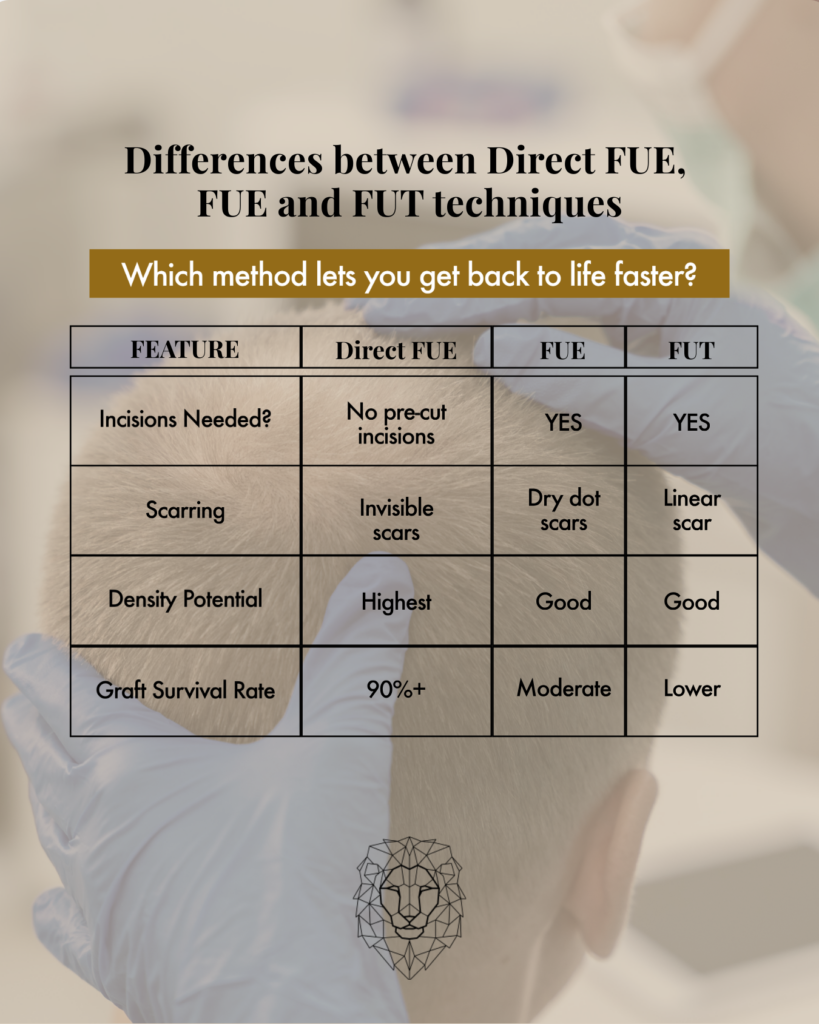
FUE hair transplant stands for Follicular Unit Extraction. In this procedure, the surgeon extracts individual grafts and then plants them in thinning areas. Many men choose FUE because it allows for no linear strip scar and provides the flexibility to wear a variety of hairstyles.
Who is FUE Best For?
FUE is best suited for you if:
• You prefer to wear your hair very short and want to minimize the amount of visible scarring.
• You need hairline work or moderate crown coverage.
• You desire to have a plan to restore your hair in stages over time.
• You value being able to quickly recover socially (in many cases).
Common Disadvantages of FUE
FUE is highly dependent on technique. If a clinic harvests too aggressively, your donor area can appear thin. Furthermore, high graft sessions require careful planning and expert execution. These are reasons why ethics in hair restoration surgery are particularly important, especially when protecting the donor area.
FUT Follicular Unit Transplantation
What is FUT and When Will it Be a Good Option?
FUT hair transplant involves removing a small strip of skin from the donor area and then dissecting it into grafts. While many men avoid FUT because it leaves behind a linear scar, there are situations where FUT remains the best option for men who require a high number of grafts and are willing to compromise on scarring.
Who Benefits Most From FUT?
FUT is best for you if:
• You require a higher number of grafts but can have them implanted in fewer sessions.
• You intend to wear your hair long enough to cover the linear scar left behind by the strip harvesting process.
• You wish to maximize your donor area in certain cases.
Questions to Ask Yourself Before Choosing FUT
Ask yourself: Will I continue to grow my hair long enough to hide a linear scar? Ask yourself: How does the clinic manage closure and healing?
Modern Variations of FUE Direct FUE
What is Direct FUE and Why Are Men Asking About It Now?
Direct FUE is often referred to as the act of placing a graft into the recipient site immediately after extracting it from the donor area. Many teams also utilize a tool called an implanter pen to ensure precise control of the angle, depth, and direction of the graft. As a result, many men associate Direct FUE with the ability to place grafts precisely, allowing for a more natural hairline design.
The Technical Basis Behind Implantation Concepts
The technical basis of implantation concepts is reviewed in discussions of hair transplantation technique. The rationale for handling and placement is clearly explained in this review.
Why is Direct FUE the Strongest Choice?
Ask yourself: Am I looking to have the greatest level of control possible over direction and to have a hairline that looks as natural as possible? If your answer to both of those questions is yes, then Direct FUE may be a good option for you, especially if the clinic you are considering focuses on:
• Natural angles and hairline design
• Controlled placement for consistent direction
• A planned process with follow up and maintenance
At Clinique de Monsieur, we view Direct FUE as a component of a long term plan, not just a one time event. This allows our patients’ results to remain as natural as possible as their hair loss continues to evolve over time.
How to Select the Right Method for You
Should Scarring Influence Your Decision?
Yes. If you intend to wear your hair very short, FUE is generally considered to be a safer cosmetic decision. If you intend to wear your hair longer and you need to replace a larger number of grafts, FUT may still be an option for you. Regardless, your surgeon should discuss scarring openly and honestly.
Do I Really Need All Those Grafts?
Ask yourself: Do I want to achieve cosmetic density or full density? Cosmetic density is the typical desired result for most men. Hair lines are designed with artistic considerations and soft transitions, while crowns are typically restored with strategic coverage. Thus, maximum grafts are not always the best plan.
Recovery Time
Ask yourself: How quickly would you like to return to work, exercise, and social events? During the initial phase of healing, expect some degree of redness, crustiness, and swelling. Hair transplant recovery education will assist in establishing realistic expectations for recovery time.
Conclusion
There is no single best hair transplant technique for every man today. FUE is preferred due to its lack of a linear scar, while FUT is still suitable for men who require a higher number of grafts and are willing to accept scar trade offs. Direct FUE is the best option for men who are interested in having precise placement and natural hair line design, especially within a long term plan.
If you would like a customized suggestion, please schedule a consultation at Clinique de Monsieur to assess your hair loss pattern, evaluate your donor area, and select the safest method for your goals.