


Introduction
Types of alopecia are often misunderstood, yet they play a critical role in determining the right treatment for hair loss.
Millions of men suffer from hair loss worldwide. But what many men do not realize is that not all hair loss is the same. What men think might be one type of alopecia could actually be another. Therefore, learning about the different types of alopecia is vital to finding the right treatment.
At Clinique de monsieur, our goal is that each and every man get the right diagnosis. And with direct fue (follicular unit extraction) being a new method of transplanting, we have found that with the use of Choi implanter, grafts are able to be placed with great detail, very little trauma and ultimately very natural-looking results.
In this article, we will outline the major types of alopecia, describe the reasons behind each and give you guidance as to which treatments would be the best choice.
What Is Alopecia?
How is alopecia defined from a medical perspective?
Alopecia is a medical term that defines loss of hair on the scalp or other areas of the body. Depending upon the reason for losing hair, some instances of alopecia may be temporary, while others may be irreversible.
Why is it so important to categorize alopecia accurately?
Each type of alopecia needs to be treated differently. If you treat a condition improperly due to incorrect diagnosis, then your treatment will likely fail. Thus, proper identification will allow for a specific course of action and therefore successful treatment.
What Are the Different Categories of Alopecia?
How is alopecia broken down into categories?
There are two major classifications of alopecia:
- Non scarring alopecia
- Scarring alopecia
Both classifications are important, as they define whether or not the hair follicle remains intact.

Non-Scarring Alopecia Types
What is androgenetic alopecia?
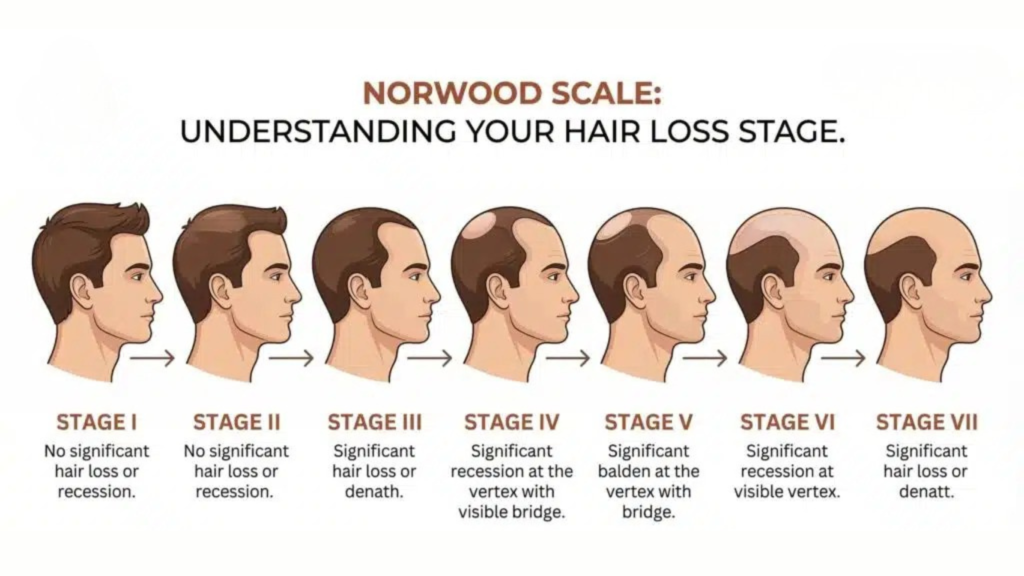
Androgenetic alopecia (also referred to as male pattern baldness) is the most prevalent type of hair loss experienced by men. This type of hair loss is caused by a combination of genetics and the effects of dihydrotestosterone (DHT).
How does androgenetic alopecia develop?
Development of androgenetic alopecia can follow a typical pattern:
- Recession at the hairline
- Thinness at the crown
- Decrease in density over time
Why is early intervention important?
Early intervention allows the doctor to begin treatment before there is significant damage to your remaining follicles. As long as your follicles remain active, you can slow or halt further hair loss.
What is alopecia areata?
Alopecia areata is an autoimmune disease where the immune system mistakenly identifies hair follicles as foreign and begins attacking them.
What are the defining characteristics of alopecia areata?
- Patchy hair loss
- Circles or oval-shaped bald spots
- Spontaneous regrowth
Can alopecia areata be treated?
Yes. Spontaneous regrowth is common if the immune system’s attack is stopped or suppressed.
What is telogen effluvium?
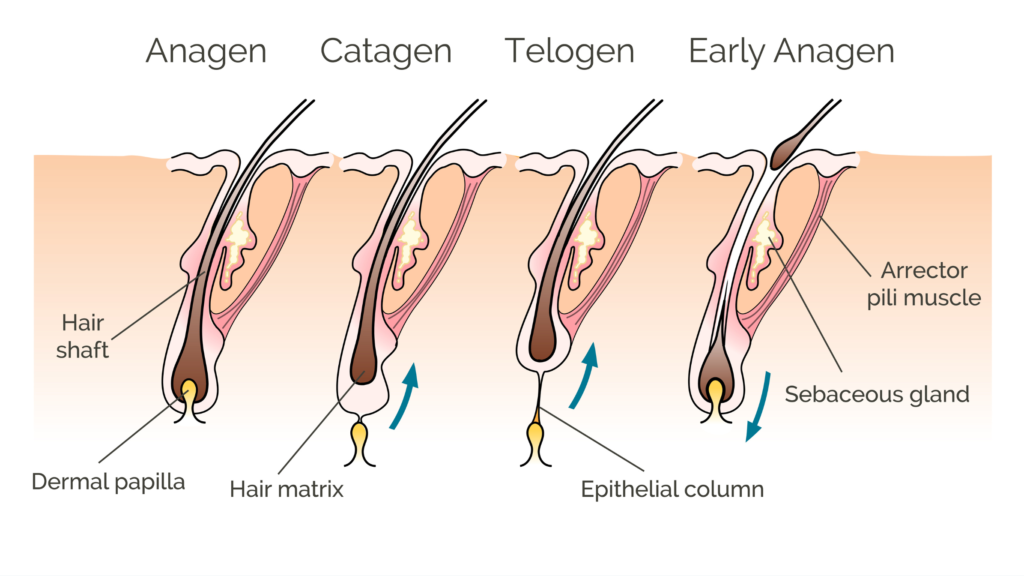
Telogen effluvium is a temporary disorder that results from either internal or external stresses.
What causes telogen effluvium?
- Stress
- Illness
- Hormonal changes
- Nutritional deficiencies
Can telogen effluvium be reversed?
Yes. After addressing the underlying causes, hair typically returns to normal.
What is anagen effluvium?
Anagen effluvium occurs when rapidly growing hairs fall out due to exposure to medications.
What causes anagen effluvium?
Chemotherapy is commonly associated with this condition.
Scarring Alopecia Types
What is scarring alopecia?
Scarring alopecia is a permanent form of hair loss, resulting from destruction of hair follicles and replacement with scar tissue.
Examples include:
- Lichen planopilaris
- Frontal fibrosing alopecia
- Central centrifugal cicatricial alopecia
Identifying Your Type of Alopecia
Patterns of hair loss can help identify the type of alopecia you have:
- Localized vs diffuse thinning
- Gradual vs sudden onset
If you notice redness or irritation, you should seek professional evaluation.
How Is Alopecia Diagnosed?
Diagnosis typically includes:
- Physical scalp examination
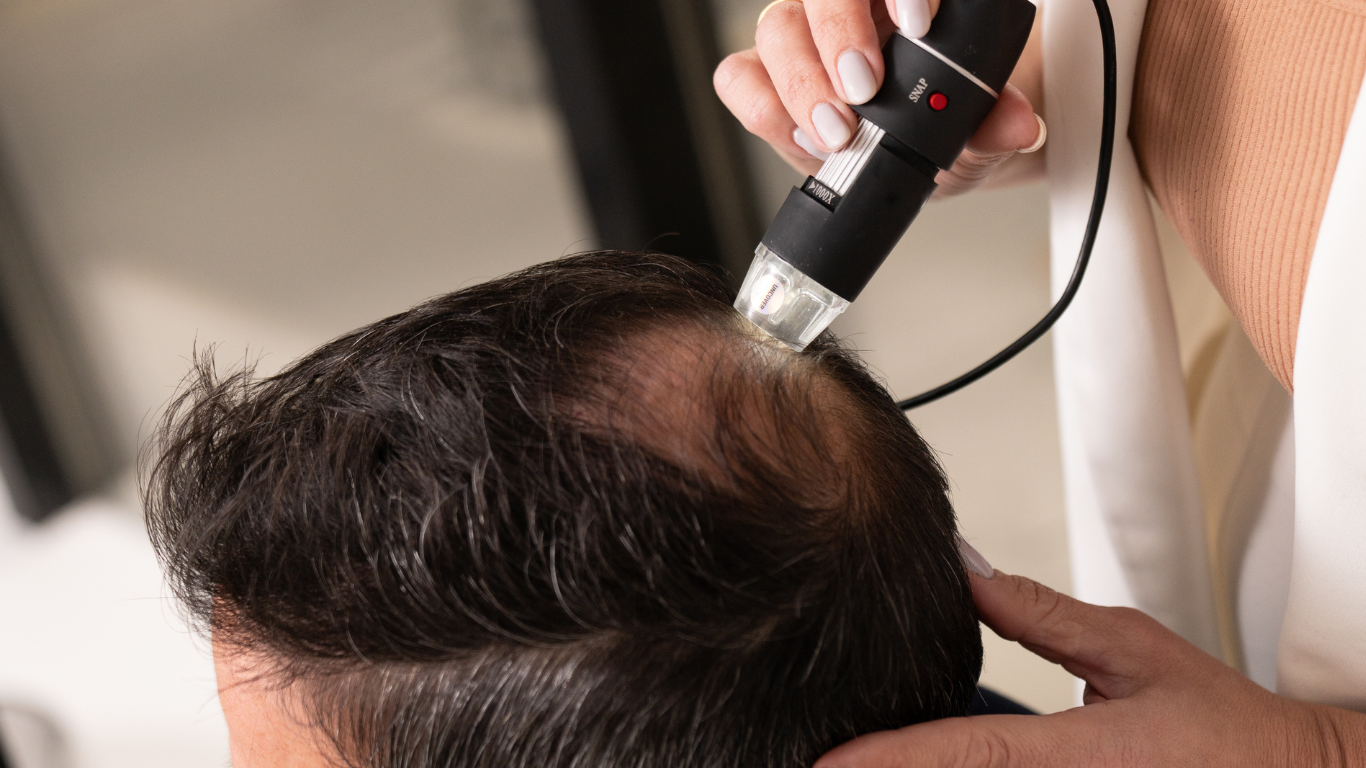
- Trichoscopy
- Medical history review
- Blood tests if necessary
This helps determine:
- Type of alopecia
- Stage of progression
- Follicle health
- Best treatment plan
Conclusion
Understanding the different types of alopecia is essential because accurate diagnosis determines the success of treatment.
Furthermore, achieving optimal results depends on early diagnosis, proper planning, and advanced techniques such as Direct FUE. When grafts are being implanted with the use of Choi implanter, precision is enhanced, results appear natural, and long-term success is maximized.
At Clinique de monsieur, we aim to produce aesthetically pleasing and long-lasting results for all patients by combining personalized treatment strategies with advanced technology.
Are you ready to understand your hair loss condition?
We invite you to schedule your consultation and discover the most suitable solution tailored to your needs with Clinique De Monsieur.