


Introduction
When does new hair grow after a hair transplant? This is one of the first and perhaps most important questions that patients ask before deciding on a solution like Direct FUE.
At Clinique de Monsieur, we recognize that you are not seeking a procedure you want to be confident, to achieve natural results, and to know what to expect. Yet, hair restoration is a process, not an immediate change.
Therefore, what really occurs after a Direct FUE hair transplant? When can you see results, and what can you anticipate throughout the process? In this article, we outline the timeline and science behind it, step by step.
Understanding the Hair Growth Cycle After a Direct FUE Hair Transplant
What is the Natural Hair Growth Cycle?
First, to determine when new hair begins to grow, we need to understand how hair grows naturally.
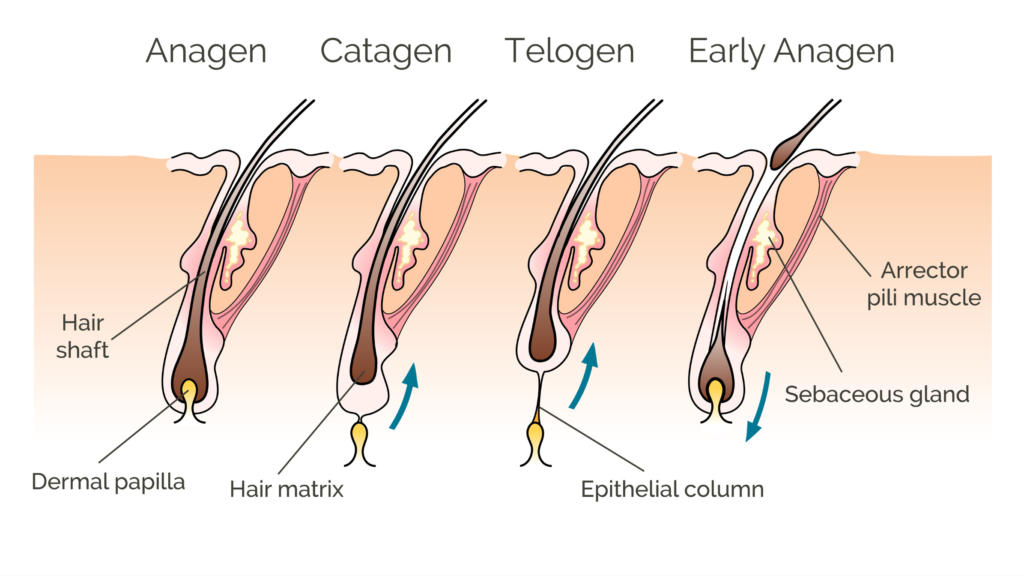
Hair grows through three stages:
- Anagen Growth Phase Hair continues to grow for many years
- Catagen Transition Phase Hair growth slows down, and the follicle shrinks
- Telogen Resting Phase Hair falls out to make room for a new hair to grow
For more scientific insight into the hair cycle, you can refer to the American Academy of Dermatology.
How Does Direct FUE Affect the Natural Hair Growth Cycle?
After a Direct FUE hair transplant, the implanted follicles go into temporary dormancy. Consequently, the newly transplanted hair usually falls out within the first week or two after the surgery.
Did this happen because the procedure failed in some manner? Absolutely not. To the contrary, this is a necessary step in the new, healthier hair growth.
When Do New Hair Start Growing After Direct FUE?
What Happens Immediately After the Procedure?
Between the first 1 to 2 weeks following the procedure, your scalp heals. During this time, you will probably observe the following:
- Small Scabs Starting to form on the scalp where the hair was transplanted
- Redness Some mild redness especially noticeable if there were areas of tension or swelling
- Sensitivity Especially in the areas where the hair was transplanted
Once healing has begun, between weeks 2 to 4, shedding begins. While this period may seem alarming, it is simply a part of the process.
Why Do the Transplanted Hairs Fall Out First?
You may ask yourself why the hairs fall out before growing back.
The reason for the shedding is that the follicles have reset themselves. The hair shaft sheds off, but the roots underneath the skin is still alive. Thus, this stage sets the stage for new hair growth.
When Do New Hairs Grow?
Generally, new hair starts to grow approximately three to four months after the procedure. Initially, the hair is:
- Fine Compared to the donor hair, the transplanted hair is finer
- Light in Texture The transplanted hair will generally be lighter than the original hair
- Uneven Due to the fact that the donor hair came from different parts of the head, the transplanted hair will initially be uneven
This is merely the starting point.
How Does Hair Evolve Over Time?
As you get closer to five to six months, the hair thickens and appears more prominent. Between nine to twelve months, the density increases dramatically.
Then, between twelve to eighteen months, you will finally enjoy your complete, natural looking hair.
What Makes Direct FUE Unique?
What is Different About Direct FUE vs Other Methods?
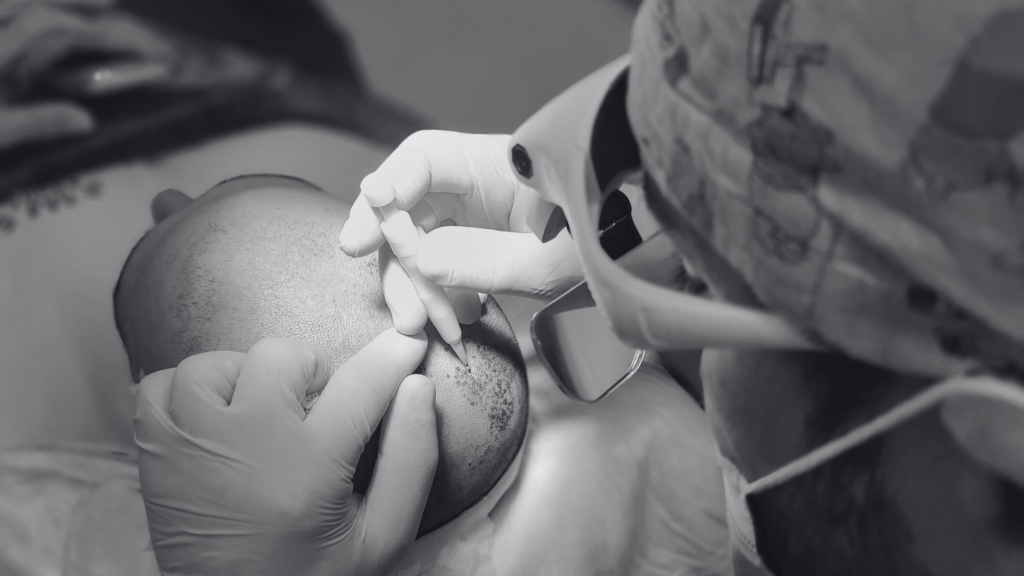
What makes Direct FUE unique compared to other techniques is that it is a one-step process. In contrast to traditional procedures, grafts are being implanted with the use of a Choi implanter, eliminating the need for separate steps.
Why is this so beneficial?
- It limits the amount of time the grafts spend outside of the scalp
- It decreases stress to the scalp tissue
- It maintains follicular health
Will the Technique Used for My Hair Transplant Impact Hair Growth?
Yes. Since the follicles remain in better shape, they recover more quickly. As a result, patients tend to experience:
- Easier recovery
- Greater percentage of successful graft survival
- Simpler and more consistent hair growth patterns
At Clinique de Monsieur, we utilize advanced methodology aligned with global standards such as those described by the World Health Organization to ensure optimal outcomes.
What Influences Hair Growth After a Transplant?
Why Does Each Patient Have a Different Timeline?
Hair growth is not uniform among individuals. Therefore, what influences the differences in timelines?
Important Elements That Influence Results
- Genetics Determines how fast you grow hair
- Age Generally, younger patients tend to recover faster
- Your Health and Lifestyle Diet and habits impact hair growth
- Your Scalp Condition Good blood flow to the scalp promotes follicle function
- Expertise of Your Surgeon Precision and skill influence both quality of hair and density
At Clinique de Monsieur, we assess all elements to create tailored and reliable outcomes.
How Can You Support Your Hair to Grow Quickly?
What Should I Do After My Procedure?
While the process itself will take time, you can help support your own results.
Guidelines For Post Treatment Care
- Follow your doctor’s instructions regarding your post-surgery care exactly as prescribed
- Maintain a clean and protected scalp
- Refrain from excessive contact with the grafts
What Role Does Nutrition Play?
Nutrition helps promote hair regeneration. Focus on:
- High quality protein
- Vitamins such as Biotin and Vitamin D
- Minerals including iron and zinc
You can also explore nutrition guidelines from the Harvard Medical School.
What Should I Avoid?
To safeguard your development, avoid:
- Smoking
- Excessive alcohol consumption particularly during the initial healing stages
- Prolonged exposure to direct sunlight
- Severe physical strain
Conclusion
So, when do new hair start growing after a Direct FUE hair transplant?
In most cases, new hair begins to appear around three to four months, while full results develop over twelve to eighteen months. Although patience is essential, the final outcome delivers natural density and long-lasting results.
At Clinique de Monsieur, with more than 20 years of experience in hair restoration, each treatment is performed exclusively by specialized Plastic Surgeons and Dermatologists, who combine scientific knowledge with an aesthetic approach. Our goal is to create a completely natural result that respects each individual’s unique facial features and remains harmonious over time.
If you are experiencing hair loss and looking for a permanent hair restoration solution, the next step is to schedule a consultation with a specialized professional. You can send us photos of the area of concern and receive a free, personalized evaluation from the medical team at Clinique de Monsieur, along with the most suitable treatment plan tailored to your needs.
Your journey begins with expertise, precision, and a personalized approach.