


Introduction
How can I prepare for my hair transplant journey?
A hair transplant is not just a procedure. It is a carefully structured journey that begins long before the day of surgery and continues through every stage of recovery until the final results are achieved.
At Clinique de Monsieur, we believe that preparation, precision, and post-operative care are equally essential for achieving optimal, natural-looking outcomes. Therefore, understanding the complete before and after hair transplant timeline allows you to approach the process with confidence and realistic expectations.
Moreover, when using advanced techniques such as Direct FUE, where the grafts are being implanted with the use of Choi implanter, we ensure maximum accuracy, minimal trauma, and faster healing.

Before a Hair Transplant
What are some things I should be aware of prior to having a hair transplant procedure?
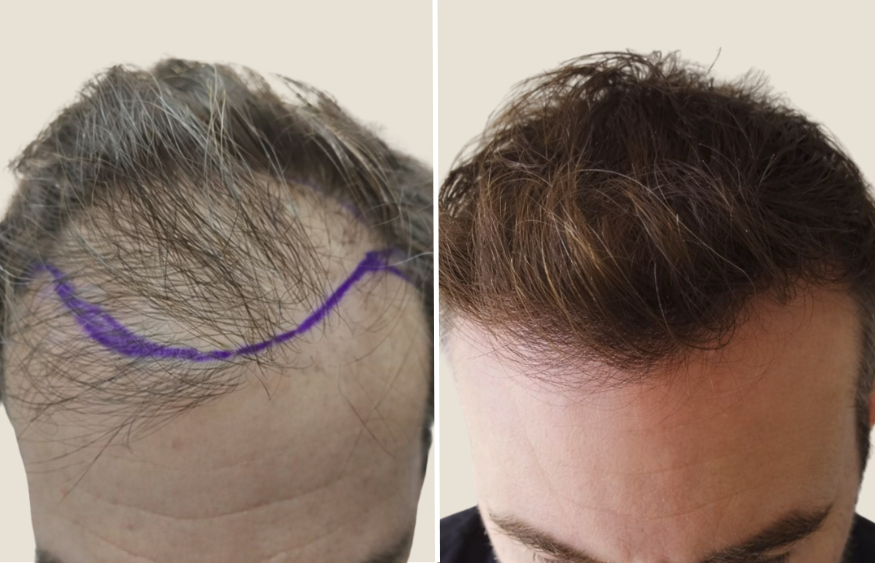
Your specialist will conduct a detailed consultation before performing the procedure. This consultation is where the doctor assesses your scalp, analyses your donor site or sites, and creates your future hairline design.
Why is preparation important when it comes to successful hair transplantation?
Preparation is one of the most important elements in the success of your hair transplantation. When the surgical team prepares properly for the patient’s individualised case, they can create a natural-looking hairline with good density throughout the recipient area, and promote long-term hair growth in those areas.
What can I expect to happen during the preparation phase?
During your preparation phase, you can expect your surgeon to:
- create a customized treatment plan based upon your specific hair loss condition
- design your future hairline based on your facial characteristics
- review your medical history and perform a thorough examination of your scalp
- provide you with preoperative instructions to follow so that you can heal efficiently after the procedure
Additionally, your surgeon will likely educate you on how to prepare yourself physically and emotionally for the upcoming procedure.
The Day of the Procedure
How does Direct FUE differ from other hair transplantation methods?
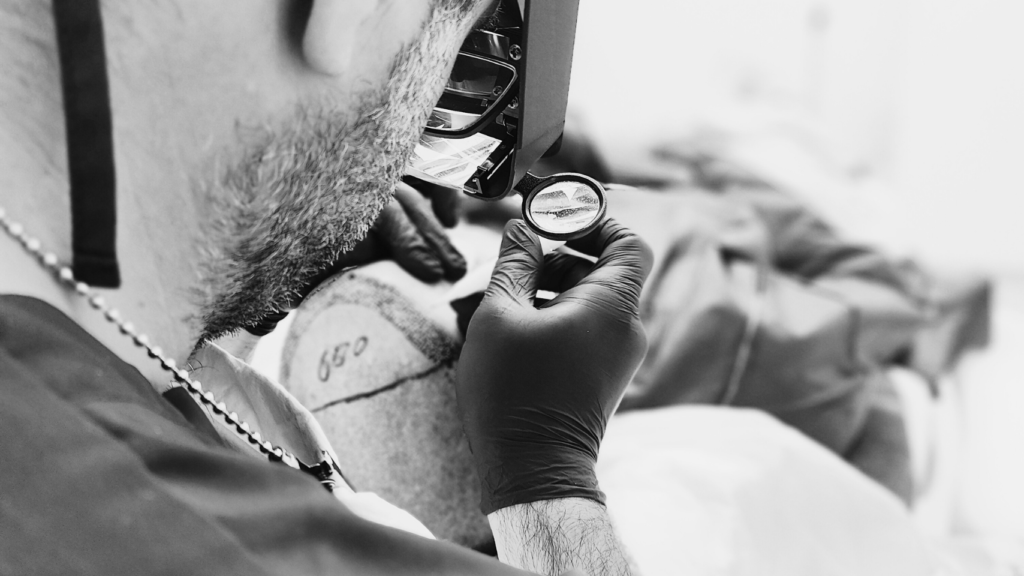
There are several differences between Direct FUE and other forms of hair transplantation. One major difference is that instead of removing strips of skin from the back and sides of your head, we remove individual follicle units. We then extract them individually using specialized instruments.
Finally, we insert them into balding areas using a device called Choi implanter, where the grafts are being implanted with the use of Choi implanter, allowing us to place them at precise angles and depths so that they appear as if growing naturally.
Why is the Choi Implanter important in hair restoration?
Using the Choi implanter during a hair transplant procedure provides the surgeon with control over three very important parameters
- the angle of insertion of each individual hair follicle unit
- the depth of insertion
- the direction in which each hair follicle grows
With these parameters under control, we can obtain extremely natural-looking results.
How does Direct FUE compare to other methods?
Direct FUE has many benefits compared to older procedures. Some include:
- lower risk of trauma to the surrounding tissue
- shorter recovery times
- higher rates of successful graft survival
- more natural appearing hairlines
Overall, patients who undergo Direct FUE typically recover faster and enjoy higher-quality results than those who undergo more traditional methods.
After a Hair Transplant
What can I expect immediately following my hair transplant surgery?
Following the procedure, you will begin the healing process. You may notice some mild redness, swelling, or scabbing at the sites where the grafts were inserted.
How do I take care of my scalp following a hair transplant?
To assist in healing, there are certain steps that you should take
- avoid manipulating or rubbing against the grafted areas
- adhere strictly to washing instructions
- sleep with your head slightly elevated above heart level
- limit heavy lifting or bending for the first few days following the procedure
Your surgeon will also instruct you on proper wound care and provide you with additional advice on caring for your scalp during the initial recovery period.
Why is it so important to follow instructions post-surgery for successful graft survival?
Wound care is perhaps the most important aspect of a successful hair transplant. Wounds left unattended can lead to complications such as infection, scarring, or improper graft survival. Proper wound care promotes healthy graft development and increases chances for optimal density.
Hair Transplant Timeline
When do I start seeing visible results following a hair transplant?
While hair growth does not occur overnight, you will see Results as the biological cycle progresses.
What is the typical time frame between each phase of hair growth following a hair transplant?
Typically, the phases occur as follows:
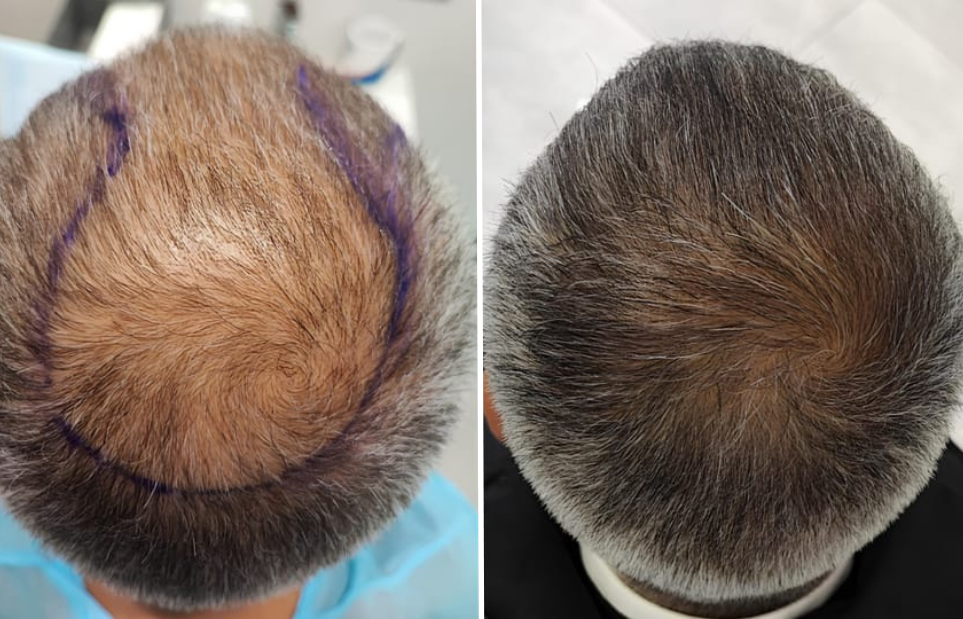
- weeks 2 to 4, shedding phase shock loss
- months 3 to 4: early signs of hair growth
- month 6: noticeable improvements in density throughout the recipient area
- months 9 to 12: final results achieved
Why is patience essential during this process?
Hair growth follows a natural biological rhythm. Therefore, gradual progress leads to stronger, more stable, and natural-looking long-term results.
Before and After Results
What does a successful hair transplant result look like?
A successful transformation includes
- natural hairline design
- improved density
- even distribution of hair
- seamless blending with existing hair
How dramatic are the results?
While results vary depending on individual characteristics, most patients experience a noticeable improvement in both appearance and confidence
Factors That Influence Hair Transplant Results
What affects the final outcome?
Several factors determine your results:
- surgeon expertise
- technique used Direct FUE
- donor area quality
- post-operative care
- overall health and lifestyle
Why is consistency important?
Consistent care and adherence to medical advice significantly improve long-term results and graft survival.
Common Questions About Hair Transplant
Will I lose some or all of the grafts after a hair transplant?
Yes, losing some or all of the grafts is normal and even expected. This is part of the natural hair growth cycle.
Do I have to wait too long before resuming normal activities?
You can resume most daily activities relatively soon. However, you should always follow your surgeon’s guidance.
When may I expect to see the final results?
Most patients reach their final Results between 9 and 12 months after the procedure.
Conclusion
Understanding the before and after hair transplant timeline allows you to approach your procedure with clarity and confidence
At Clinique de Monsieur, we combine advanced medical expertise with innovative techniques such as Direct FUE, ensuring precision, natural results, and long-lasting outcomes
With proper preparation, correct aftercare, and patience, your transformation will lead to improved density, enhanced appearance and renewed confidence
Are You Ready to Experience Your Before and After Transformation?
Schedule your consultation today and receive a personalised treatment plan tailored to your needs with Clinique De Monsieur.