



Why Is the Donor Area So Important?
To begin with, when you are thinking about getting a hair transplant, most people immediately think about the end result. However, a more important question is: “What is the donor area in hair transplant and why is it so important?”
Simply put, the donor area is the foundation of every successful hair transplant. The quality, quantity, and long term performance of the hair that will be transplanted into the recipient area depends entirely on the quality of the donor area.
Additionally, the way that a specialist evaluates and manages the donor area will impact the visual outcome of the treatment and the longevity of the treatment.
At the Clinique de Monsieur, we approach every case with precision and personalization. By combining detailed donor analysis with advanced Direct FUE techniques, we ensure that each patient achieves natural, balanced, and long lasting results.
Therefore, evaluating the donor area is an essential part of the decision making process for any hair transplant procedure.
What Is the Donor Area in Hair Transplant?
What does the term “donor area” really refer to?
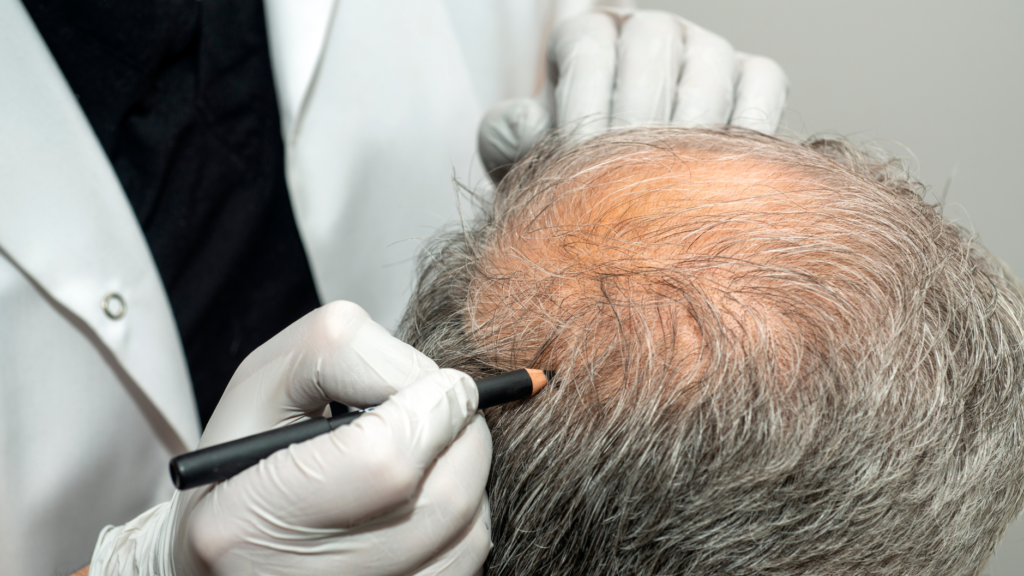
The donor area is defined as the portion of the scalp that contains healthy hair follicles that can be used for transplantation. Generally speaking, this region is located on the sides and rear portions of the scalp where hair loss is less likely to occur.
These areas are also resistant to the effects of dihydrotestosterone (DHT) that causes hair loss. For this reason, the donor area is the best possible source of hair follicles for transplantation purposes.
Additionally, the donor area represents a permanent source of hair follicles. Since these follicles are resistant to the effects of DHT, they will continue to grow naturally in the recipient area.
Why is donor hair considered permanent?
Hair follicles that are located in the donor area are not susceptible to the hormonal changes that lead to hair loss. When these follicles are transplanted, they will retain their genetic makeup and continue to grow over time.
This basic principle of hair transplantation is the fundamental basis of modern hair transplantation techniques.
Why Does the Quality of The Donor Area Matter for Hair Transplantation?
How does the quality of the donor area affect the end result of hair transplantation?
The quality of the donor area is directly related to the success of a hair transplant. Follicles that come from a robust donor area will provide thicker hair and allow for a denser hairline. Conversely, poor donor quality will severely restrict the ability to obtain a full head of hair.
Additionally, good donor quality will enable surgeons to create a natural appearing hairline and blend well with existing hair.
What defines a strong donor area?
A strong donor area has the following qualities
• High density of hair follicles
• Thick hair shafts
• Good flexibility of the scalp
• Evenly distributed hair
Therefore, it is critical to perform a thorough evaluation to determine the maximum amount of hair that can be safely harvested while creating a natural looking appearance.
How Is the Donor Area Evaluated Before Hair Transplantation?
What happens at a consultation?
Before a surgeon performs a hair transplant, he or she must evaluate the donor area. At Clinique de Monsieur, our evaluations include:
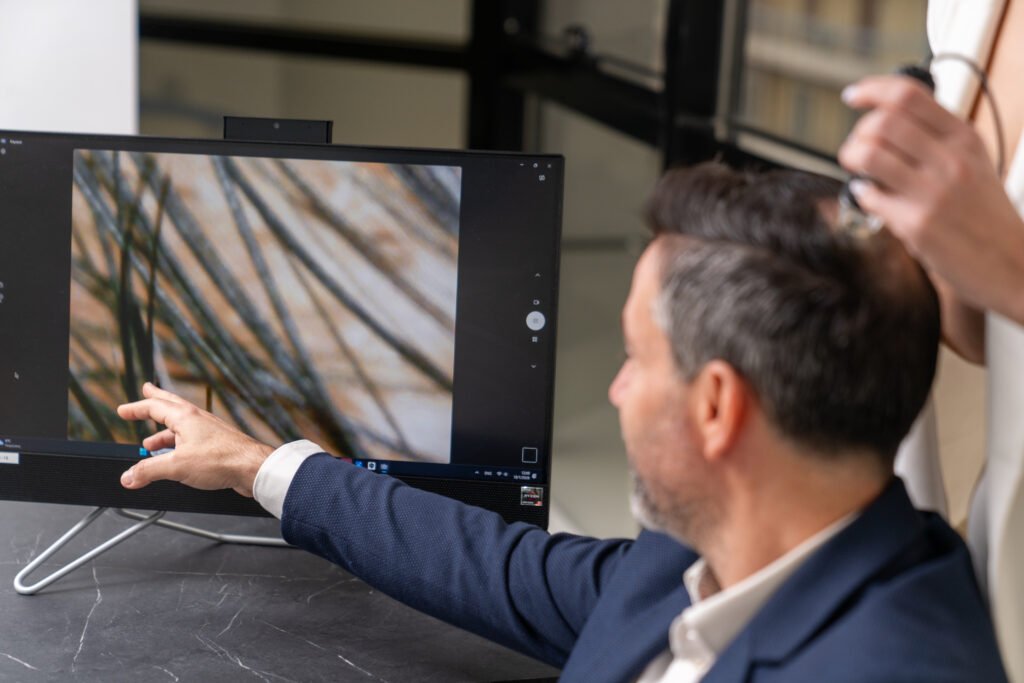
• Digital imaging of the scalp
• Measurements of hair density
• Evaluation of hair characteristics
• Assessment of the degree of hair loss and the rate of progression
This will help to ensure that the treatment plan meets the patient’s long term objectives.
Why is a personalized evaluation important?
Each patient presents a unique set of circumstances. Therefore, the total number of available follicles will vary from one person to the next. A personalized evaluation will permit the surgeon to:
• Establish safe limits of harvesting
• Prevent excessive harvesting
• Develop a treatment plan for potential future treatments
This approach will provide a combination of safety and long term success.
What Is Donor Area Management and Why Is It So Important?
What is involved in managing the donor area?
Donor area management is defined as the systematic and deliberate removal of hair follicles in such a manner that the natural appearance of the scalp is maintained. Instead of simply removing hair follicles randomly, a surgeon will follow a specific pattern.
What are the key principles of effective donor area management?
Effective donor area management involves
• Equitable spacing of the sites of extraction
• Maintenance of the hair around the extraction sites
• Restrictive harvesting of the number of follicles
• Monitoring of the donor area density to prevent significant changes to the donor area
Failure to properly manage the donor area can result in the donor area being excessively thinned or patched, particularly if the donor area is over harvested. Severe over harvesting may result in irreversible damage to the donor area.
How Does Direct FUE Preserve the Donor Area?
Why is Direct FUE a modern hair transplant method?
Direct FUE is a state of the art hair transplant method that allows the surgeon to extract single hair follicles with great accuracy. The primary advantage of this method is that it reduces trauma to the surrounding tissue and increases the surgeon’s control over the entire procedure, as grafts are being implanted with the use of a Choi implanter.
What are the benefits of using Direct FUE for preserving the donor area?
Using Direct FUE for hair transplantation offers several advantages to the donor area including
• Less trauma to surrounding tissues
• Shorter recovery period
• Smaller scars
• Increased accuracy in extracting follicles
As a result of using Direct FUE, the donor area will remain densely populated and maintain its natural appearance.
How Many Grafts Are Available for Harvesting from The Donor Area?
Is there a limit to the number of grafts that can be obtained from the donor area?
Yes, there is a limit to the number of grafts that can be obtained from the donor area. Therefore, harvesting must be done carefully to prevent long term damage to the donor area.
What factors determine the number of grafts that can be harvested?
There are a variety of factors that determine the number of grafts that can be harvested from the donor area. These include:
• Density of hair
• Health of the scalp
• Amount of hair loss
• Potential need for future treatments
What are some common graft counts?
Common graft counts for mild hair loss are
• 1,500 to 2,500 grafts
Common graft counts for moderate hair loss are
• 2,500 to 4,000 grafts
Some individuals with extensive hair loss may require multiple treatments.
Therefore, careful planning is required to ensure long term results.

Can the Donor Area Heal After Extraction?
Will my hair grow back in the donor area?
No, the hair follicle that was extracted will not regrow. However, the surrounding hair will cover up the areas where the follicles were removed, providing a natural appearance.
How long does the healing process take?
Typically, the donor area takes approximately 7 to 10 days to heal. During this time, the small holes left by the extraction of the follicles will close and be nearly invisible. Proper post treatment care will aid in the healing process and ultimately produce the best possible outcomes.
What Sets Clinique De Monsieur Apart When It Comes to Managing the Donor Area?
What sets Clinique de Monsieur apart?
At Clinique de Monsieur, we combine medical science with art. We develop a customized treatment plan based on the individual characteristics of each patient. Our approach to managing the donor area includes:
• A comprehensive evaluation of the donor area
• Development of a customized harvesting plan
• Use of Advanced Direct FUE techniques
• Continued monitoring of the patient during the procedure
Why do patients choose Clinique de Monsieur?
Our patients choose us because we focus on:
• Achieving natural and unnoticeable results
• Obtaining a high percentage of graft survival
• Preserving the density of the donor area over the long term
Ultimately, we are focused on delivering quality rather than quantity.
Conclusion
Why the Donor Area Is the Most Important Component for Long Term Success with Hair Transplantation
Therefore, what truly determines the success of a hair transplant?
It all starts with the donor area. The donor area determines the quality of the hair that will be transplanted into the recipient area, the amount of hair that can be achieved, and ultimately the long term success of the procedure.
Therefore, selecting a clinic that understands and appreciates the importance of the donor area is paramount.
At Clinique de Monsieur, we have developed a reputation for delivering the highest level of precision and medical expertise combined with beautiful, natural looking results. Contact us today to schedule a consultation and learn how proper donor area management can ensure a successful and natural looking hair transplant.