


Millions of men and women around the world experience hair loss. When this happens at a young age, it can be particularly difficult to manage, leading to questions such as:
“Can I stop hair loss?”
“Will I need to shave my head?”
“Can I afford the cost of hair restoration?”
Fortunately, the answer is yes. One of the most successful methods for restoring lost hair is hair restoration surgery.
There are two ways to restore lost hair. The first is through hair transplantation and the second is through hair replacement systems.
Hair replacement systems involve adding artificial hair to the existing hair. They are usually wigging or toupees that are attached to the hair that already exists.
In contrast, hair transplantation involves transferring healthy hair follicles from one point of the body to another.
What is a hair transplant?
How does a hair transplant work?
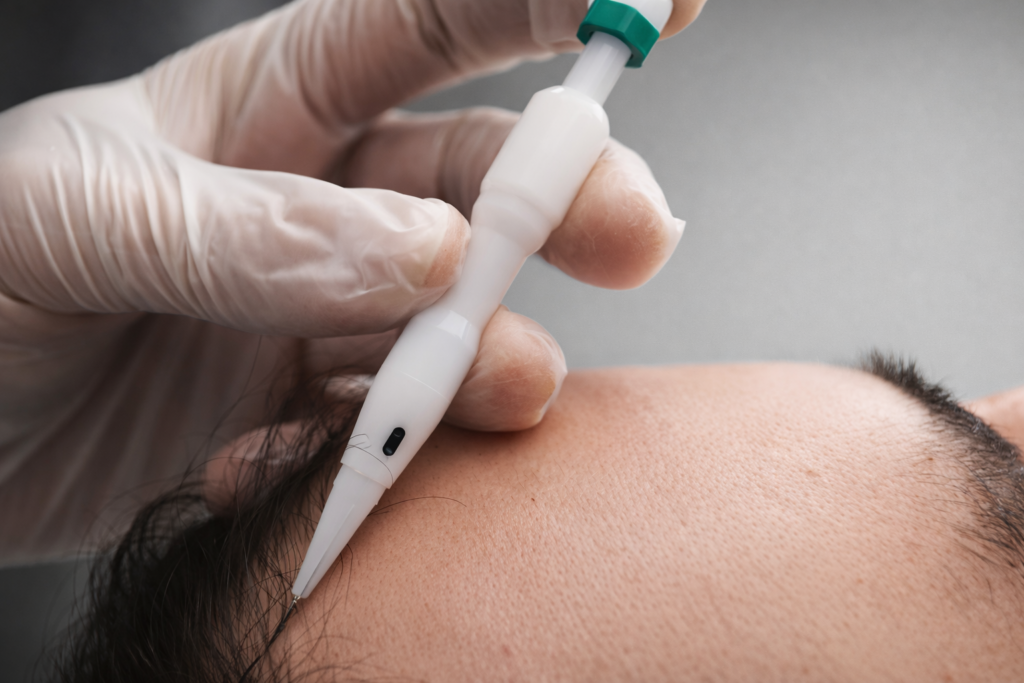
Simply put, a hair transplant is a surgical procedure in which healthy hair follicles are removed from one area of the head (donor area) and implanted into another area (recipient area).
The most common hair extraction area is the back of the head. For this reason, hair transplantation is often also referred to as hair restoration.
Doctors identify the donor area by palpating the back of the head. Wherever there is no hair loss, that is where the hair follicles are taken from.
The surgeon then removes individual hair follicles from the donor area. After the extraction is completed, the doctor creates microscopic openings in the recipient area and places each hair follicle into them.
When a hair transplant is performed, the hair follicle retains its genetic material. This means that after transplantation the new hair will follow the same normal growth cycle.
The five basic stages of the procedure
Step 1 – Consultation and scalp analysis
During the consultation session, the doctor examines the extent of the patient’s hair loss. He also assesses the amount of hair that remains and determines the best therapeutic approach for hair restoration.
Step 2 – Preparation of the donor area
In the next stage, the doctor prepares the donor area for hair follicle extraction. The procedure includes cleaning the area, applying local anesthesia, and preparing for the removal of the hairs.
Step 3 – Hair follicle extraction
This is the most time-consuming and difficult part of the procedure. The doctor uses a special tool to remove the hair follicles from the donor area.
The doctor must be extremely careful so that the root of the hair remains intact. If the root is damaged, the transplanted hair will not be able to grow.
Step 4 – Preparation of the recipient area
After the hair follicles are removed, the doctor prepares the recipient area by creating microscopic openings in the skin.
The size of the openings depends on the size of the hair follicles that will be implanted.
Step 5 – Implantation
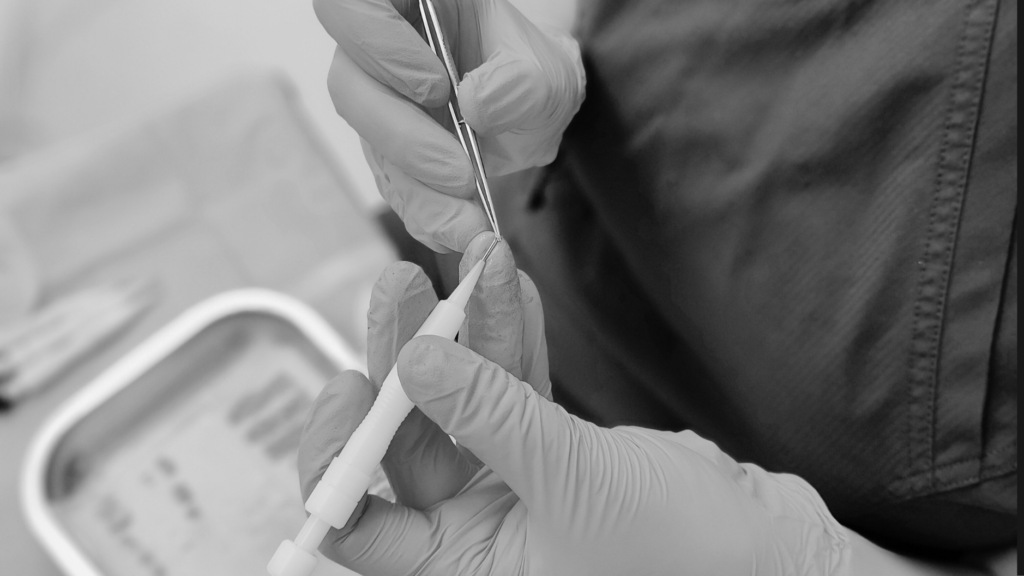
Implantation is the process during which the hair follicles are placed in the recipient area with a special tool.
After the procedure is completed, the healing period begins.
Hair Transplant Techniques
In modern hair restoration, three main hair transplant techniques are primarily used:
- Direct FUE (Follicular Unit Extraction)
- Standard FUE (Follicular Unit Extraction)
- Sapphire FUE (using sapphire blades)
All three methods aim to transfer healthy hair follicles from the donor area of the scalp to areas affected by thinning or hair loss. However, they differ significantly in the implantation process, the level of control during placement, and the final aesthetic outcome.
Direct FUE Technique (Follicular Unit Extraction)
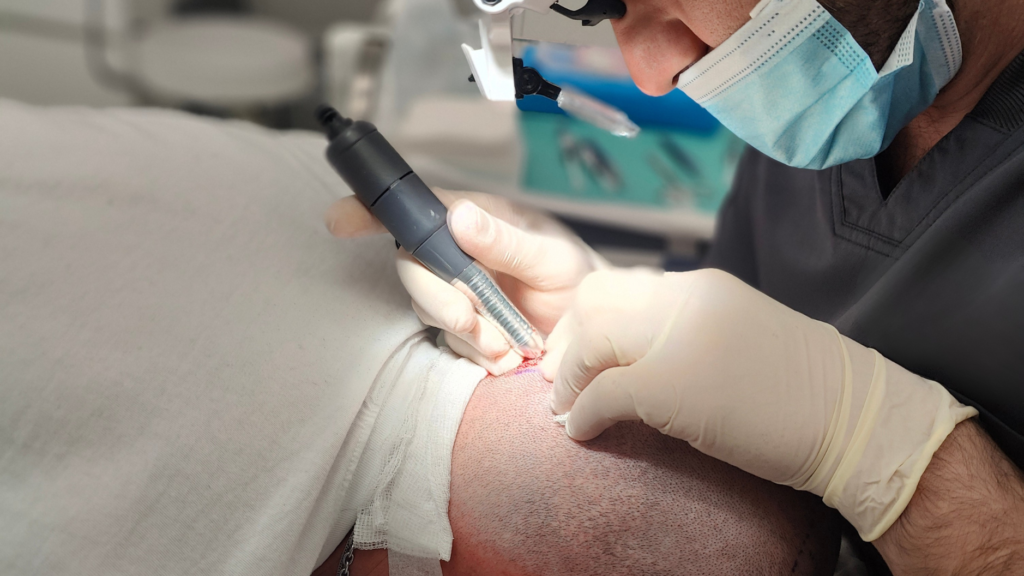
Direct FUE (Follicular Unit Extraction) is one of the most advanced and refined hair transplant techniques available today.
It is a minimally invasive procedure in which hair follicles are extracted individually from the donor area using a very fine precision tool and implanted immediately using a specialized implanter, without the need to create recipient channels beforehand.
This means that implantation is performed in a single step, allowing full control by the doctor over each individual graft.
Compared to other techniques:
- no pre-made incisions are required
- implantation is performed with precise control of angle, depth, and direction
- the natural structure of the hair is better preserved
- graft handling is minimized
The extracted follicles are implanted directly into the areas affected by thinning or hair loss.
Advantages of Direct FUE
Direct FUE has become particularly popular because it offers several advantages:
- Minimally invasive procedure
- High level of control over naturalness (angle, direction, density)
- More natural and softer hairline results
- Faster recovery
- Reduced trauma to the skin
- Ability to keep hair very short
For many patients seeking the most natural-looking outcome, Direct FUE is considered the most advanced option.
FUE Technique (Follicular Unit Extraction)
The standard FUE technique also involves extracting hair follicles individually from the donor area, similar to Direct FUE.
The main difference is that it is a two-step process:
- small channels (incisions) are first created in the recipient area
- the grafts are then placed into these channels
This method is also minimally invasive and does not leave a linear scar, but rather tiny, barely visible marks.
However, because the process is separated into two steps, the final angle and direction of hair growth largely depend on how the channels are created.
Sapphire FUE Technique
Sapphire FUE is an evolution of the standard FUE technique.
The main difference is that the channels in the recipient area are created using sapphire blades instead of traditional steel blades.
This allows:
- more precise and finer incisions
- improved density control compared to standard FUE
- reduced trauma to the skin
However, the procedure still follows a two-step approach (channel creation followed by graft placement), which differentiates it from more advanced implantation techniques.
Step-by-step guide to the hair transplant procedure
What patients should expect
Understanding the procedure helps patients feel more prepared and confident.
The basic stages are as follows:
- Cleaning of the scalp
- Application of local anesthesia so there is no pain
- Extraction of healthy hair follicles from the donor area
- Creation of a natural hairline that suits the face
- Placement of each graft with precision
After that, the patient receives detailed instructions for recovery and care after the procedure.
The duration of a hair transplant session depends on the number of grafts and usually ranges from four to eight hours.
Recovery and hair growth timeline
When do the results appear?
Many patients want to know how long it takes to see results. The process requires patience, as the results appear gradually.
Typical recovery period
Days 1–3
Redness or swelling may appear, but they usually subside quickly.
2 days – 3 weeks
The transplanted hair falls out. This is called shock loss and is normal.
3 weeks – 4 months
New hair growth begins to appear.
6 – 9 months
Hair density improves significantly.
12 months
The final result becomes fully visible, with denser and healthier hair.
The transplanted hair follicles are permanent, so the hair continues to grow normally.
Why are hair transplants so popular
Hair transplants have many advantages compared to other treatments for hair loss?
Some of the reasons they are so popular are:
- Permanent hair restoration
- Natural hair appearance
- Increased density
- Minimal maintenance over time
- Long-lasting results
Modern techniques allow doctors to create natural hairlines that blend in with the rest of the hair.
For many patients, the increase in confidence that a hair transplant offers is worth the cost of the procedure.
Is everyone suitable for a hair transplant?
No, not all people are suitable candidates for a hair transplant.
Before recommending the procedure, the doctor examines various factors such as:
- Whether there is an adequate donor area
- Whether the hair loss is stable
- The patient’s general state of health
- Realistic expectations for the result
For this reason, it is important to undergo a consultation assessment by a specialized doctor.
Why choose Clinique De Monsieur for a hair transplant?
Choosing the right clinic is a decisive factor for the final result of the hair transplant.
Clinique De Monsieur has more than 20 years of experience in medical hair restoration, offering personalized treatments to patients from all over the world. The clinic is staffed by certified plastic surgeons and dermatologists, with expertise in the diagnosis of hair loss and in the most modern hair transplant techniques through the use of the Direct FUE technique.
The goal of Clinique De Monsieur is to achieve a 100% natural result, through a detailed and personalized approach that considers the structure of the face and the natural hair growth pattern of each patient.
At Clinique De Monsieur, the combination of medical experience, modern technology, and patient care makes it the ideal choice for those who wish for hair restoration.
Advantages of Clinique De Monsieur
At Clinique de Monsieur, the modern Direct FUE method is used, which is an advanced form of the FUE technique. The specialized doctors use this advanced hair transplant technology to create personalized treatment plans, designing natural hairlines and providing full support to patients.
Conclusion
Hair loss can significantly affect a person’s self-esteem and appearance.
Fortunately, modern medical advances offer effective solutions for natural hair restoration.
Hair transplantation is a long-term solution for dealing with thinning and baldness, transferring healthy hair follicles from the donor area to the thinning areas.
If you are experiencing hair loss and looking for a permanent hair restoration solution, the next step is to schedule a consultation with a specialized professional.
You can send us photos of the area you are interested in and receive a free personalized evaluation from the medical team of Clinique de Monsieur, together with the appropriate treatment proposal tailored to your needs.