



Male pattern hair loss is progressive; therefore, your strategy should be long-term. Once hair loss has begun, DHT causes miniaturization of the hair follicle in genetically sensitive follicles resulting in reduced hair volume, length, and visibility until eventual growth slows down and or stops. Therefore, many men experience hair loss in the form of recession in the frontal hairline, thinning temples, a widening crown, or diffuse thinning across the top of the head. The purpose of developing a long-term strategy is to create a plan which will allow you to maximize your current hair growth, protect the donor site (the back and sides), and maintain a natural appearance for years to come. A good place to begin is to obtain a medical background of male pattern baldness.
Identify Your Hair Loss Pattern Prior to Developing Solutions
Which region of the head experiences the greatest degree of hair loss?
Begin with the zone that is responsible for the greatest impact of your overall appearance. Hairline recession creates a frame for the face and is usually the first noticeable sign of hair loss to be photographed by friends and family. Crown loss may be slower to develop and take longer to treat due to its swirling patterns and the way it reflects light. Compare monthly photographs taken in the same lighting conditions and from the same angles to provide an objective view of your hair loss, and compare these every 3 months to prevent making hasty decision(s).
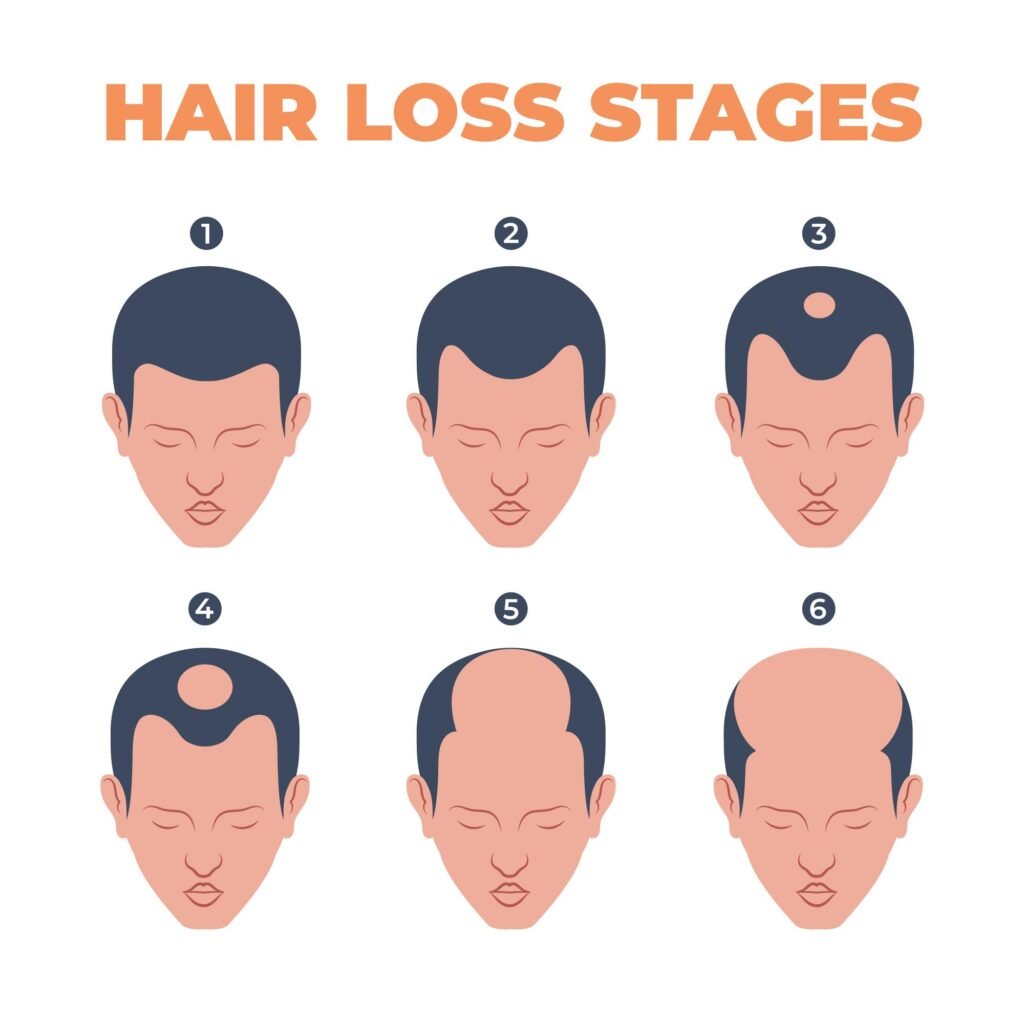
Use a Staging System to Avoid Unrealistic Designs
Using a common language can help create a plan. The Norwood Scale is one of the most commonly used systems to categorize patterns and levels of severity. Using this system can also help you identify an unnatural-looking hairline which may appear to be artificially low and straight, which can also lead to an unnatural looking hairline as your hair loss progresses.
Establish Your Definition of Success in a Sustainable Way
What do you hope to achieve in the next 12 months?
- Many men focus on hair loss prevention and regrowth, however, stabilizing your existing hair loss may be the more important first step in protecting what you have left. Establish your definition of success through measurable outcomes such as:
- Less shedding per month.
- More consistent coverage in your photographs.
- Improved styleability under harsh lighting conditions.
- A believable, age-appropriate hairline shape.
Once you have defined success in a sustainable manner, you will cease to be constantly changing products in an attempt to find the right product, and you will begin to establish consistency.
Consistency Is More Effective Than Intensity
Hair grows in cycles, therefore, measuring progress is done in months. Consistently performing a routine which allows you to complete your daily hair care activities on busy days is much more effective than having a perfect plan which you cannot follow.
Develop a Plan That Aligns With the Biology of Hair Loss
Why do quick fixes rarely work?
While shampoos, oils, and dietary supplements may enhance the texture of your hair and improve the condition of your scalp, they rarely, if ever, stop the process of miniaturization of your hair follicles. A successful long-term program involves utilizing evidence-based solutions and working with a professional who understands the biology of hair loss and can provide guidance beyond marketing claims.
Stabilize First, Then Build Thickness
A practical long-term strategy will initially protect what remains of your hair, followed by providing support for thicker growth over time. Understandably, you should anticipate gradual improvement. The largest mistake is stopping too early and assuming nothing is working.
Document Progression Without Allowing Anxiety to Develop
Take monthly photographs and document your shedding and styling performance in a simple notebook. Review your results every 3 months to ensure your decision-making process remains calm and rational.
Healthy Scalp and Hair Care Which Preserves Appearance
Inflammation can exacerbate shedding and cause thinning to appear worse
Redness, itching, flaking, and irritation can increase shedding and reduce the appearance of fullness. By addressing scalp-related issues, you can improve the quality of your hair and the results of your styling efforts.
Hair care can reduce breakage and contrast
Excessive brushing, excessive heat styling, and chemical processing can cause breakage and increase frizz, creating contrast between hair and scalp. Many men appear to have fuller hair with shorter cuts because of the reduction in contrast between hair and scalp.
Supportive Lifestyle Habits Without Exaggerating
Can lifestyle reverse genetic hair loss?
No, but lifestyle can provide you with stability to remain consistent with your long-term plan and reduce unnecessary triggers of shedding. Stable lifestyle habits can support your long-term success.
What provides the most benefit in everyday life
Prioritizing adequate protein intake, regular sleep, basic stress management techniques, and moderate exercise can support your long-term plan. Crash diets can negatively affect your overall well-being.
Non-Surgical Methods to Enhance Confidence
Why Does Confidence Matter Strategically
If you currently feel confident, you are more likely to adhere to your long-term plan. Improving your appearance via non-surgical methods, including styling, hair fibers, and scalp camouflage, can positively influence how you perceive yourself while your long-term plan is in effect.
Why This Prevents Poor Decision-Making
Desperation often leads to extreme hairlines, exaggerated graft promises, and bargain procedures that harm the donor site. Confidence enables you to make informed decisions.

Hair Transplantation as a Tool, Not the Final Solution
A transplant replaces hair but does not slow down progression
A transplant places hair in areas where there is little to no hair; however, surrounding hair can continue to miniaturize around transplanted hair. If you do not have a long-term plan, your transplanted hair may appear uneven later. An overview of hair transplantation is provided under hair transplantation.
When Surgery Is Reasonable
Surgery is most successful when your hair loss pattern is clear, your donor zone is being protected, and your expectations are reasonable. The most significant benefits result from a combination of strategic planning and staged development, not the number of grafts you receive.
Clinique de Monsieur: Diagnosed-Plan Based and Direct FUE
Diagnosis prior to design
Clinique de Monsieur emphasizes diagnosis-led planning prior to discussing the number of grafts needed. Your hair loss pattern, donor zone density, and potential for future hair loss determine the design of your hair restoration procedure to ensure that your results remain natural over time.
Direct FUE Supports Discreet and Natural Results
Clinique de Monsieur utilizes Direct FUE when possible to support discrete, natural hair growth patterns and long-term aesthetic appeal. Direct FUE positions grafts for immediate implantation after extraction, thus minimizing time outside the body. It frequently employs an implanter pen to enable precise control of graft angle, depth, and direction to promote natural hair growth patterns and aesthetic appeal. Results typically mature gradually over several months, commonly between 8 to 12 months. For additional information regarding Direct FUE, please refer to follicular unit extraction.
What Should I Ask During My Consultation
- What is my diagnosis and likelihood of further hair loss?
- How will you protect my donor site in the long term?
- Who will design my hairline, and perform the critical steps of my surgical procedure?
- What is the expected duration of shedding and regrowth?
- What is the long-term plan if I lose more hair?
Conclusion
Male pattern hair loss requires a long-term strategy, not an emergency response. Identify your hair loss pattern, monitor your progress objectively, and establish goals that you can realistically sustain for at least 1 year. Focus on achieving stabilization of your current hair loss, maintaining scalp health, and setting realistic timeframes, then consider surgery as a focused method to supplement your comprehensive plan.
If you would like to have a discreet, doctor-led approach to managing your hair loss, please schedule an appointment with Clinique de Monsieur. At Clinique de Monsieur, you will receive a diagnosis-guided plan to address your hair loss needs, a long-term plan to protect your donor site, and a natural hair restoration design which may incorporate Direct FUE as a viable option when appropriate, with direct-to-body placement and use of an implanter pen to control graft angle, depth, and direction as your results mature over the coming months.