


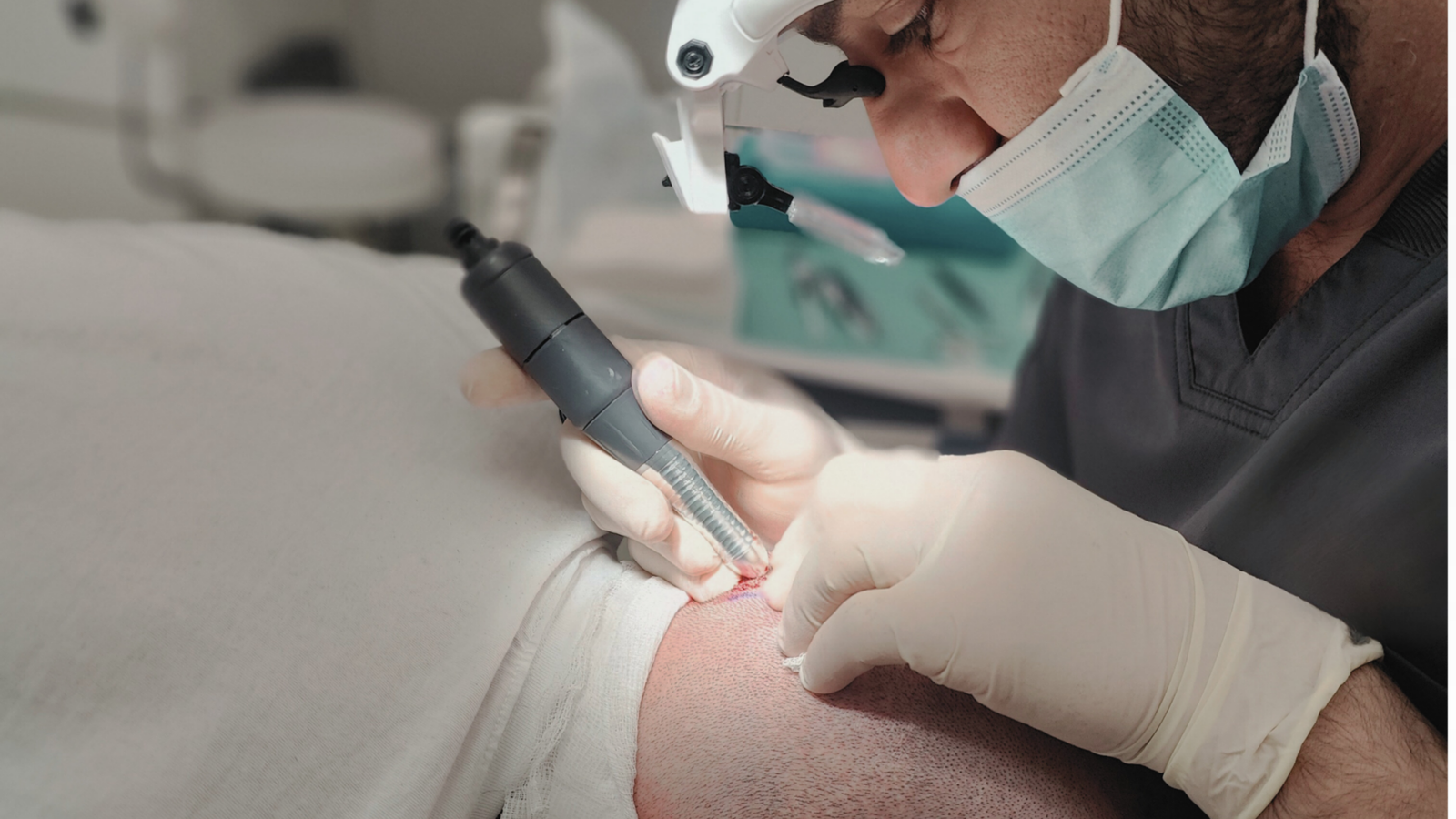
The frustration of hair loss and the misinformation that surrounds it can add insult to injury. Some claim a hair transplant “will definitely” solve all problems. Others insist they don’t work at all. That’s why we created this information to give you the truth about hair transplantation in men, so you can make informed decisions. In this article, we’ll cover the basics of a hair transplant for men, explain what FUE and FUT mean, provide realistic examples of hair transplant results, describe what hair transplant recovery entails, discuss what factors affect hair transplant costs, and offer guidance on choosing a safe and reliable hair transplant clinic. We’ll also show how Clinique de Monsieur promotes its innovative Direct FUE method to achieve the best looking hairlines possible.
The Basic Facts About Hair Transplantation for Men
How does a hair transplant for men actually work?
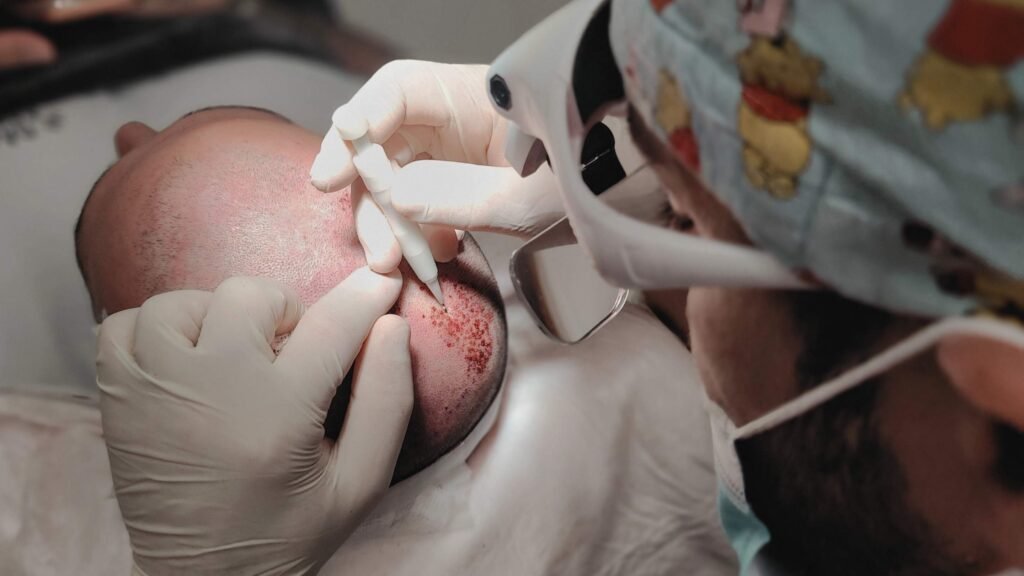
A hair transplant for men simply relocates hair bearing follicles from the donor area to the recipient area using hair restoration surgery. The donor area typically consists of the back and sides of the head. The recipient area typically includes the hairline, the temples, or the crown of the head. Essentially, hair restoration surgery just redistributes your existing hair. Since the donor hair typically has a lower sensitivity to DHT than the rest of your hair, once relocated, the donor hair typically continues to thrive as explained in this hair transplant overview.
Do hair transplants create new hair?
No, hair transplants do not produce new follicles. They move existing follicles to different locations in your scalp.
Myth vs Truth: Common Misconceptions About Hair Transplantations for Men
Myth: Hair transplants give you immediate results.
Reality: Most patients will notice their hair fall off in the first three weeks after a hair transplant. At that point, the normal hair cycle kicks in and patients begin to notice regrowth within a few months, and these expectations align with hair transplant guidance.
Timeline:
Weeks 1 to 3: shedding and scabs
Weeks 3 to 4: Early growth
Weeks 6 to 9: Noticeable growth
Weeks 12 to 18: Full maturation
If you expect to wake up with instant fullness, you’re likely to be disappointed. But if you expect a steady progression, you’ll be able to evaluate your results reasonably.
Myth: Once transplanted, the hair never falls out again.
Reality: Although the transplanted follicle is less susceptible to DHT than your remaining hair, your non transplanted hair may continue to thin. As a result, many men require a long term strategy to maintain total density and prevent thinning in the area behind the transplanted zone.
Myth: All hair transplants look unnatural.
Reality: Modern hair transplantation techniques can yield very natural looking results. However, the outcome depends heavily upon the design of the hairline, the angle at which the grafts were placed, and the strategic placement of the grafts to mimic your natural hair distribution. Thus, the importance of technique and the clinic’s level of quality are significantly greater than marketing.
Who Makes a Good Candidate for Hair Transplantation in Men?
What criteria do clinics use to determine whether you are a good candidate for hair transplantation in men?
In general, clinics assess your hair loss pattern, donor density, and expectations. When clinics communicate clearly, you can proceed with confidence.
There are several common characteristics of candidates who tend to do well with hair transplantation in men:
- A well defined receding pattern or thinning crown
- Strong donor area with high density follicles
- Reasonable expectations regarding both coverage and density
What if I have diffuse thinning?
Diffuse thinning can increase the risks associated with surgery since the donor area itself may also be thinning. As a result, overly aggressive harvesting can decrease the overall aesthetic appeal of the hair transplantation process. Your physician should conduct a thorough assessment to ensure the donor area is stable before proceeding.
Is age relevant to hair transplantation in men?
Yes. Younger men often continue to lose hair after surgery. As a result, conservative hairline designs combined with a long term strategy to preserve a natural look over time can be useful.
What Makes Clinique de Monsieur’s Direct FUE Unique?
What is Direct FUE, and why are men interested in it?
Direct FUE is a fine tuned version of traditional FUE workflows that focus on the precision extraction of individual follicles and the careful placement of those follicles in the recipient area. Clinique de Monsieur presents Direct FUE as a superior method for creating natural looking hairlines with uniform density.
How does Direct FUE help create natural looking results?
Direct FUE workflows frequently utilize an implanter pen style to increase the surgeon’s ability to precisely place the follicles at the correct angle and in the right direction, resulting in a hairline that looks softer and more natural. Additionally, Direct FUE workflows can potentially promote graft survival and healing through reduced manipulation of the grafts.
FUE vs FUT: What’s the Difference Between the Two Hair Transplant Techniques?
What is FUE, and why is it so popular?
FUE (Follicular Unit Extraction) removes individual follicles from the donor area and places them into thinning areas. Many men prefer FUE because it produces no linear scar and allows for a variety of hairstyles.
What is FUT, and when is it used?
FUT (Follicular Unit Transplantation) takes a thin strip of hair bearing skin from the donor area and then breaks that strip into individual grafts. FUT leaves a linear scar but can harvest a large number of grafts quickly and efficiently, making it particularly useful in larger cases.
When deciding between FUE and FUT, consider the size of your donor supply, the number of grafts you need, your preferred hairstyle, and your surgeon’s experience. Planning is more important than the technique.
Realistic Expectations for Hair Transplant Results
Will a hair transplant restore my previous density?
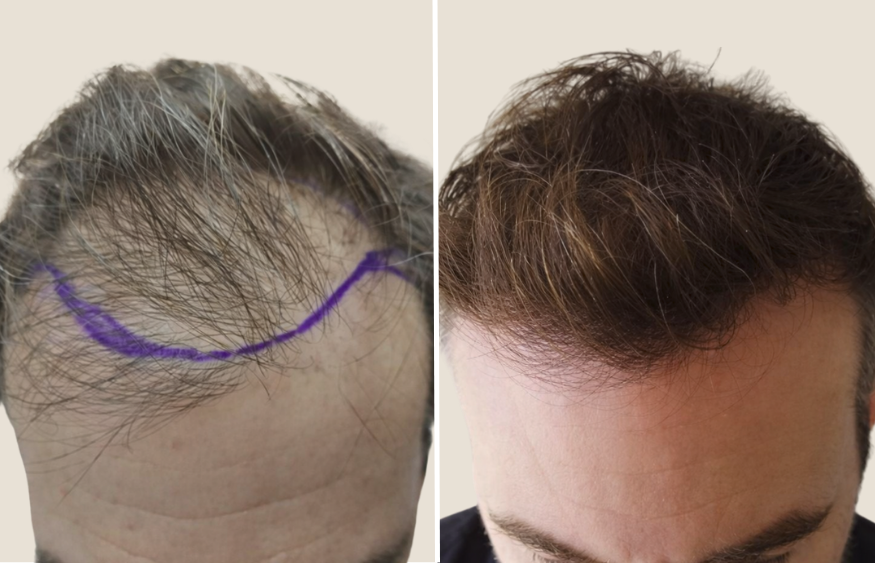
Usually not. A hair transplant provides the illusion of density by placing grafts strategically. Due to limitations in donor hair availability, many surgeons will concentrate on the front of the head initially because it has the greatest cosmetic effect and frames the face.
Can a hair transplant repair the crown entirely?
A hair transplant can certainly help improve the crown, however, the crown is typically very difficult to restore fully due to the swirl pattern of hair loss and the way light reflects off of it. As a result, some men may stage their treatments, doing the hairline first and then the crown at a later date, depending on their available donor hair and financial situation.
Pain, Downtime, and After Care During Hair Transplant Recovery
Does a hair transplant hurt?
Most men find the procedure to be tolerable. With local anesthesia, there is little to no pain, and you’ll mostly feel pressure. Following the surgery, you might feel some soreness or swelling for a few days. However, with proper after care, you’ll usually recover from the discomfort.
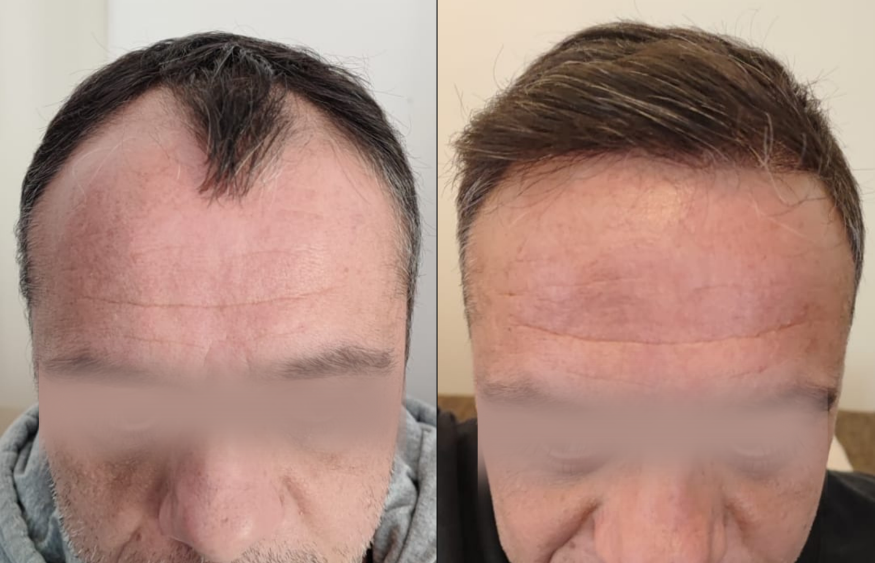
How long does hair transplant recovery take?
You can usually return to your job at a desk within a few days. However, you’ll need to protect your grafts for approximately 10 to 14 days.
Here are some typical recovery milestones:
Days 1 to 3: Swelling and soreness
Days 4 to 10: Scabbing and gentle washing
Week 2 to 4: Shedding
Week 3 to 6: Visible growth begins
Factors That Influence Hair Transplant Costs
What determines the price of a hair transplant?
Price is influenced by a combination of variables including the clinic’s standards, the surgeon’s involvement, the number of grafts required, and the complexity of the case. Clinics can either charge per graft or per session. A consultation with a clinic is the most effective way to get a quote.
Are inexpensive hair transplants dangerous?
At times, yes. Lower-priced hair transplants may indicate a clinic is taking shortcuts like over harvesting or inadequate supervision of the surgeon. Be cautious of red flags like guarantees of density, unknown surgeons, or aggressive sales tactics.
Conclusion
Hair transplantation in men can be very successful when viewed as a long term strategy rather than a quick fix. Patients can achieve excellent results when they understand that results take months to appear, that donor hair availability limits the amount of coverage that can be restored, and that the expertise of the clinic is critical to achieving a natural looking outcome. Understanding the myths surrounding hair transplantation in men, the expected timeline, FUE vs FUT, and Clinique de Monsieur’s advanced Direct FUE technology will allow patients to establish reasonable expectations for their results, recovery, and expenses.
If you want a natural looking hairline designed with long term planning and advanced technique, book a consultation with Clinique de Monsieur to discuss your hair loss pattern, donor potential, and whether Direct FUE is the right option for you.