



In a world that wants to see what you really look like, how can you hide a bad transplant by wearing your hair longer? Most people have seen a hair transplant that looked great from afar, but was unnatural up close. Usually, the culprit is the hairline. It is the first thing the eye sees, and no matter what else is done to the rest of the hair, if the hairline is unnatural, the entire result will always be unnatural.
Therefore, our goal is to create a hairline that is natural from 30 cm (12 inches) away. That’s where you get credibility, and that’s where you get premium quality.

What Makes a Well Designed Hairline?
There is no such thing as a template for a hairline. There is no one size fits all solution. Each patient needs to be evaluated clinically before a decision can be made about their hairline.
Your age and your desired outcome, meaning how young you want to look
Your facial shape and forehead size
What kind of hair you have, whether fine, medium, or coarse
Your hair color, texture, and curl pattern
Whether androgenetic alopecia is present
Whether your hair loss may continue and require additional transplantation in the future
The Golden Rules for Creating a Hairline That Lasts
How Low Should I Make My Hairline?
Many men would like to make their hairline as low as possible to minimize the size of their forehead. While a low hairline can be aesthetically pleasing for some men, it is generally not the best choice for most.
A very low hairline usually requires more grafts and puts additional stress on the donor area. We find a hairline that fits your age and will remain reasonable if you experience further hair loss. This provides long term stability and timeless beauty rather than temporary gratification.
Symmetry vs Natural Imperfection
While a perfectly straight line may look artificially created, nature produces subtle asymmetry. To create a hairline that appears genuine and sophisticated, we include micro irregularities and small breaks along the perimeter.
This keeps the hairline light and elegant and avoids making your face appear heavy.
Will It Look Good Over Time?
Many patients worry that if they lose more hair, the hairline may no longer look appropriate. When the design accounts for predictable maturation, conservative positioning, and proper graft distribution, the answer is yes.
This approach maintains balance and protects the donor area throughout all stages of life.
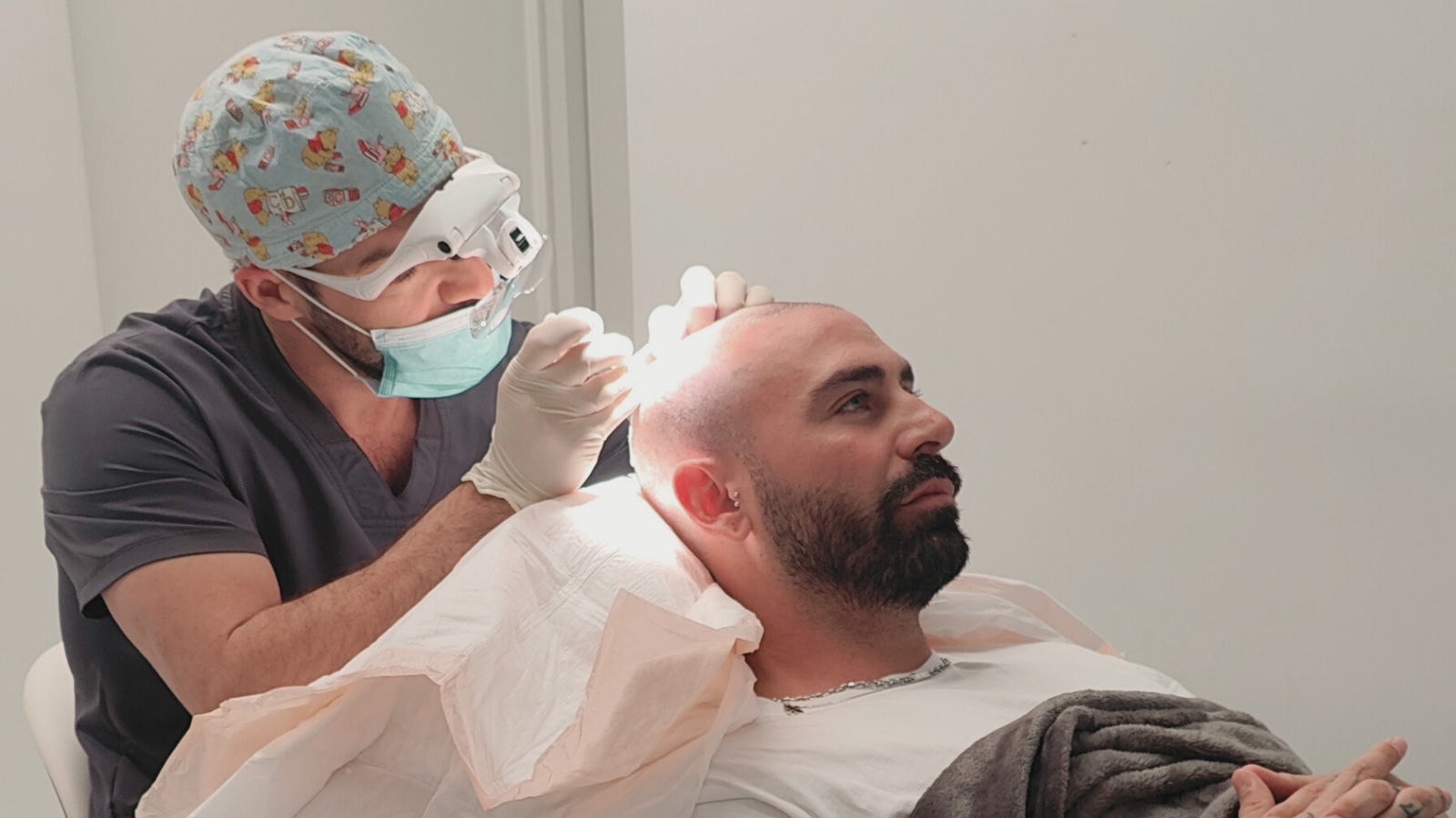
A Masculine Hairline and Male Aesthetics
What Defines a Masculine Hairline?
A typical masculine hairline has a gentle angle and an M shape, depending on the individual. It allows for realistic temple recession while maintaining facial strength.
This prevents the hairline from looking adolescent and creates harmony with the rest of your scalp, allowing for easy and natural styling.
The Most Common Aesthetic Mistake
A teenage hairline in a man over 35 is a major red flag. Even if the hairline appears dense, it will look unnatural.
We therefore prefer a mature hairline that looks correct today and tomorrow, protects the donor area, and minimizes excessive graft placement in the frontal zone.
Facial Mapping and Facial Proportions
How Do We Design Your Hairline?
We map the face and work with proportions. We consider the height of your forehead, eyebrow position, skull curvature, and temple structure. Once defined, we determine:
The mid frontal point
The outward curve and flow
Temple peaks with masculine logic
A transition zone for a natural perimeter
Personalization Is True Luxury
Personalization prevents mass produced results, reduces over correction risk, and protects the donor area.
You are not just buying a hairline. You are investing in harmony that reflects your personality and lifestyle.
Transition Zone and Density: The Hidden Detail
What Is the Transition Zone?
The transition zone refers to the first few rows of the hairline where density must be soft rather than compact. We primarily place single hair grafts in this zone to soften the edges and mimic natural growth.
This ensures that when light shines on the area, the result remains natural.
How Much Density Is Appropriate?
We do not aim for maximum density in the first row. Instead, we create a density gradient:
Front: softness and natural transparency
Behind: gradual increase using two and three hair grafts
Further back: visual volume and blending
This approach provides natural looking results and optimizes graft distribution.
Donor Safety and Graft Survival: The Foundation of a Premium Result
Why Is the Donor Area Your Capital?
Your donor area is limited, and each graft has value. If you exhaust your donor area with an aggressive hairline, you may not have enough grafts for the mid scalp or crown later.
We follow a donor first philosophy. We protect the donor area first, then enhance aesthetically.
We also extract grafts uniformly to prevent thinning of the donor area, supported by clinical discussion in follicular unit extraction.
How Can We Maximize Graft Survival?
Graft survival depends on precision and discipline. We focus on:
Atraumatic extraction and proper punch selection
Minimal out of body time
Proper graft hydration and storage
Careful site preparation with correct depth
Gentle placement without pressure
These factors significantly increase the likelihood of uniform growth and reduce patchiness, as reflected in surgical technique literature on hair transplantation.
Angles and Directions: How Hair Orientation Changes Everything
What Happens When Angles Are Incorrect?
Even with sufficient density, hair may grow vertically, in opposite directions, or create an unnatural outline.
We use micro angles so the hair falls naturally forward and blends seamlessly with native hair. In the temples, we use flatter angles that follow natural growth patterns.
How Do We Create Natural Movement?
We follow the natural flow of each area, especially in the temples, and blend transplanted hair with native hair to allow easy and natural styling, aligned with professional guidance shared by the International Society of Hair Restoration Surgery.
The Most Expensive Errors in Male Hairline Design
What Are the Most Costly Aesthetic Mistakes?
Common errors include excessively low hairlines, straight lines, placing too many grafts in the front, over filling temples, and failing to plan long term.
Overloading the frontal zone can compromise the mid scalp and crown for future procedures.
How Do We Avoid These Errors?
Before designing your hairline, we answer critical questions:
- How many grafts are required and why?
- What graft types will be used in the first row?
- How will donor safety be ensured if a second session is needed?
- How will graft survival be protected through handling and storage?
- When can mature results be expected?
Consultation Checklist
Before committing to a hairline, ask:
- How many grafts are recommended for the hairline and why?
- What graft types will be used in the first row?
- How will donor safety be ensured if a second session is required?
- How will graft survival be protected through handling and storage?
- When can I expect mature results?
What to Expect Over Time
A hairline progresses through phases. Healing comes first, followed by shedding, then gradual growth.
Results are not judged at six weeks. Clear improvement is seen at six months, and mature results are typically achieved at twelve months, consistent with patient education on hair growth cycles after transplant.
Conclusion
The male hairline is the hallmark of a successful hair transplant. When designed correctly, it provides a natural and timeless result that does not reveal surgery. When designed poorly, naturalness is compromised and valuable donor grafts are wasted.
Our method integrates face mapping, transition zone design, correct angles, donor protection, and high graft survival.
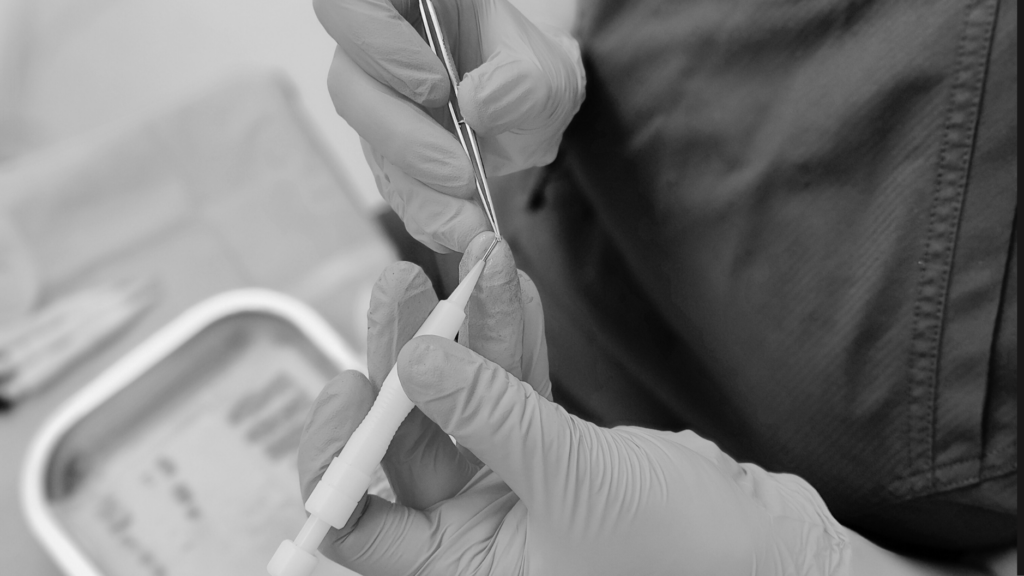
If you want a hairline that truly represents you, Clinique de Monsieur begins with planning and builds a result that stands confidently over time. If appropriate for your pattern and goals, Clinique de Monsieur may recommend Direct FUE, where grafts are implanted immediately after extraction to reduce time out of the body, often with an implanter pen to control angle, depth, and direction, with results maturing gradually over 8 to 12 months.