



A hair transplant is not a simple aesthetic service. On the contrary, it is a complete high-precision medical procedure that requires diagnosis, planning, and specialized surgical technique. Many people perceive it as a cosmetic process, but the reality is different. Patient safety, graft survival, and a natural result depend directly on medical expertise and the correct application of medical protocols.
In this article, we explain why hair transplantation is a medical act, what the role of a specialized hair transplant doctor is, what the risks are when it is treated as an aesthetic service, and how a proper medical hair restoration approach leads to a natural and long-lasting result. For international safety standards, refer to the World Health Organization and the American Academy of Dermatology, both of which emphasize the importance of medical execution in invasive procedures.
For Us, Hair Transplantation Is a Doctor’s Procedure, Not an Aesthetic Service
What a medical hair transplant includes
Can a hair transplant be performed without medical knowledge? The answer is no. The procedure includes critical medical stages that require training, experience, and clinical evaluation.
A medical hair transplant includes a full medical diagnosis of hair loss and assessment of alopecia, design of a natural hairline according to facial anatomy, surgical extraction of grafts from the donor area, controlled anesthesia and hemostasis, and medical follow-up after the procedure. According to the International Society of Hair Restoration Surgery, hair transplantation should be performed by a specialized physician for maximum safety and a natural result.
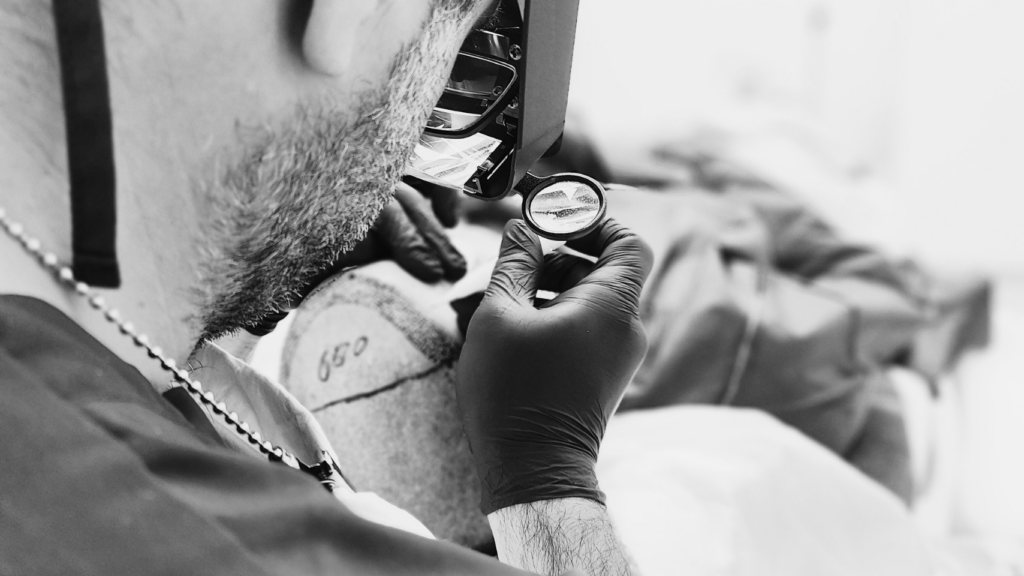
The Role of a Specialized Hair Transplant Doctor
Why medical expertise determines the result
What makes the difference between an average and a natural result? The doctor’s expertise.
A specialized doctor:
Diagnoses the type of hair loss.
Designs a natural hairline that evolves harmoniously over time.
Protects the donor area.
Optimizes graft survival.
Creates a personalized hair restoration strategy.
At the same time, medical experience reduces complications and increases procedural safety.
Medical benefits for you
The medical approach offers high procedural safety, a natural and undetectable result, stable hair density, and long-term retention.
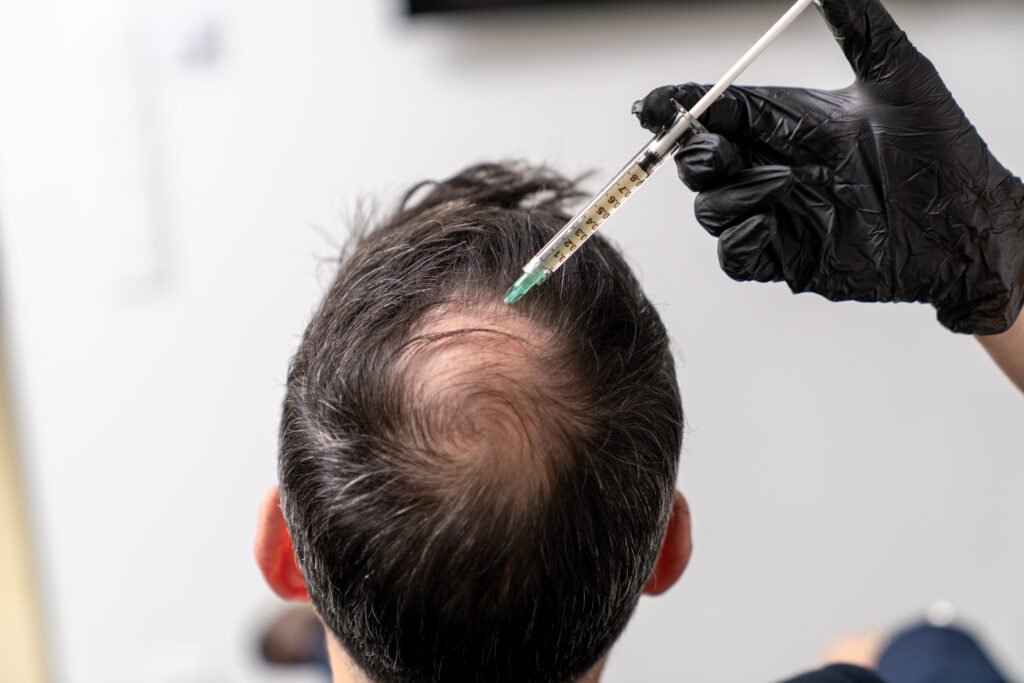
Risks When the Transplant Is Treated as an Aesthetic Service
What are the main medical risks
When medical protocols are not followed, the chances of complications increase significantly, such as infections, skin necrosis, permanent scarring, destruction of the donor area, and hair transplant complications in general.
For general medical information regarding surgical risks, see the NHS, one of the most reliable medical organizations worldwide.
How the aesthetic outcome is affected
Naturalness depends on precision. When the procedure is treated as a simple aesthetic service, the following often appear:
Unnatural hairline.
Incorrect implantation angle.
Low density.
Uneven result.
Irreversible damage.
The Importance of Personalized Medical Hair Restoration
Why every patient needs an individualized plan
Each patient has different facial morphology, hair type, and hair loss progression. That is why the following are applied:
Full medical evaluation.
Donor area analysis.
Density planning.
Long-term restoration strategy.
Continuous medical follow-up.
The goal is a natural, timeless result.
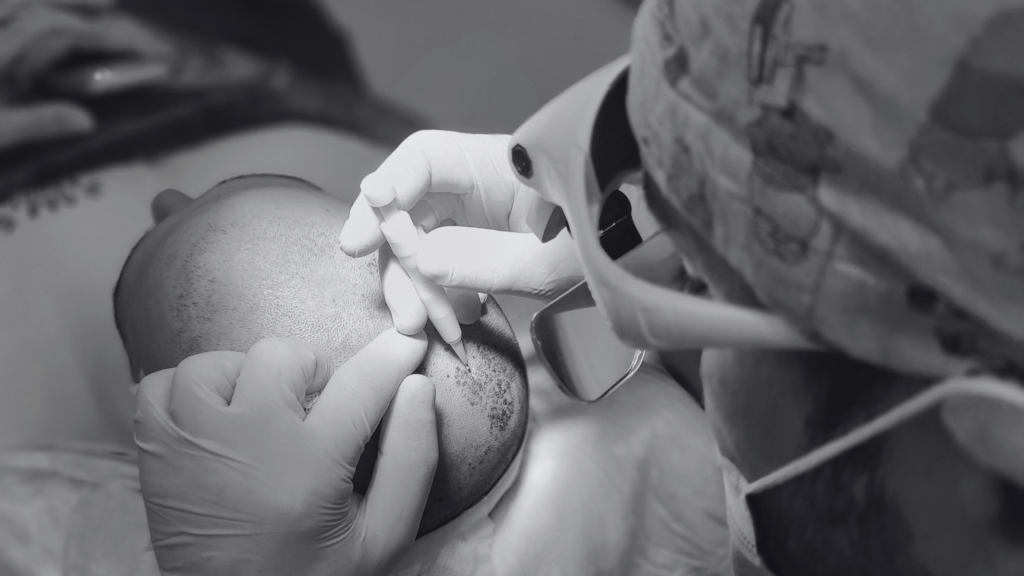
Why the Medical Approach Ensures a Natural Outcome
How a natural hairline and density are created
A natural result comes from medical precision and experience. The medical approach:
Places grafts at the correct angle and direction.
Maintains a natural density distribution.
Protects the donor area.
Increases graft survival.
Designs a hairline that evolves naturally over time.
Long-term success and safety
Why a hair transplant is a lifelong investment
Transplant success becomes visible gradually over the following months. Medical expertise ensures:
Stable results.
Natural hair evolution.
Protection of the donor area.
The possibility of a future transplant.
Conclusion
Hair transplantation is a medical procedure, not an aesthetic service. Safety, naturalness, and long-term success depend on correct medical diagnosis, the experience of a specialized physician, and a personalized therapeutic approach.
If you want a doctor-led plan focused on safety, donor preservation, and natural aesthetics, book an assessment with Clinique de Monsieur. When appropriate, Clinique de Monsieur may recommend Direct FUE, where grafts are implanted immediately after extraction to reduce time out of the body, often using an implanter pen to control angle, depth, and direction, with results maturing gradually over 8 to 12 months.