



Introduction
Natural male hairline design: why is it so important when restoring your hairline?
When restoring your hairline, a natural looking hairline is arguably the most important factor in determining how well you look post procedure. Whether you’re young or old, thinning on top or balding around the back, your natural hairline frame defines your facial balance and therefore greatly influences your overall attractiveness. Therefore, knowing what goes into creating a natural hairline is just as important when considering any type of hair restoration.
At Clinique de Monsieur, our focus is on precision, customizing for individual needs and ensuring long term aesthetic results. With the application of new techniques such as Direct Fue, where the grafts are being implanted with the use of Choi implanter, we can successfully establish both adequate density, direction and seamless cohesiveness.
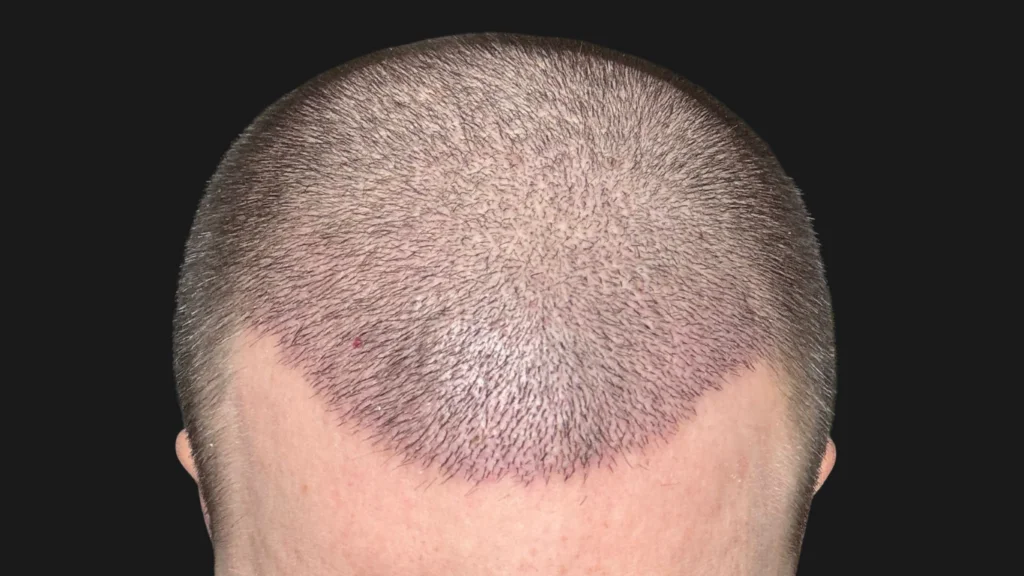
Breaking down the anatomy of a natural hairline
What does a real natural hairline look like?
A natural hairline isn’t always perfectly linear. Rather than having an absolute line, there are small imperfections present similar to those found in true hair growth. This causes it to appear gentle and evenly proportioned and entirely normal.
What are the primary characteristics of a typical male hairline?
- Irregularly shaped and uneven
- Gradual shift in density as you move toward the center of the head
- Softening of the hairline in the middle front portion
- Alignment with all facial aspects
Why can irregularity lead to more realistic results?
Since humans have a tendency to recognize patterns, a straight-lined hairline is clearly artificial. Therefore, by adding minor irregularities and controlling them carefully, the appearance of the hair becomes far more natural and acceptable.
Determining hairline placement according to individual facial features
How do surgeons decide where to place a patient’s hairline?
Placement of a hairline is based upon a person’s facial dimensions. Therefore before developing their hairline, surgeons assess each individual on their own merits.
What factors will influence placement?
- Forehead length
- Symmetry of the face
- Age
- Future direction of additional hair loss
Why is proper placement so important?
Placing your hairline too low will make it look abnormal as you get older. Conversely, if your surgeon places it too high, you may not see enough aesthetic improvement. Thus, finding the perfect balance will help assure natural results that last for a lifetime.

Gradually increasing density throughout the head creating a natural gradient
Should I have high density at my frontal zone?
While many clients ask for maximum density at their front zone, establishing an increasing gradient is required for creating a truly natural appearing hairline.
How is density strategically distributed along the scalp?
- Lower density near the front
- Increased density throughout the mid-section of the scalp
- Higher density toward the rear section of the scalp
Why shouldn’t all areas be equally densely packed?
Real hair doesn’t grow evenly. Establishing varying levels of density provides a more organic feel that allows transplanted hairs to blend seamlessly into your remaining original hairs.
Direction of angle and realistic hair growth patterns
Why are angles and directions important in hairline design?
Hair grows at specific angles and directions depending on its location on the scalp. Therefore, replicating these patterns is essential to achieve a believable and natural result.
How is precision achieved in these areas?
With direct fue, the grafts are being implanted with the use of Choi implanter, allowing surgeons to control:
- Angle
- Depth
- Direction
What ensures natural placement?
The grafts are being implanted with the use of Choi implanter, enabling precise and individualized placement. As a result, hair grows in a way that closely mimics natural patterns.
Why is Direct FUE essential for achieving a natural-looking hairline
Why is Direct FUE preferred?
Direct fue is a minimally invasive procedure that allows for superior accuracy and quicker recovery times. Therefore, it is the preferred method for achieving natural-looking hairlines.
What advantages does direct Fue offer?
- Less trauma to the scalp
- Faster healing time
- Higher percentage of graft survival
- Precise control over placement
How does direct fue enhance hairline appearance?
Because the grafts are being implanted with the use of the Choi implanter, surgeons can replicate natural hair growth patterns in terms of both direction and density. Consequently, the final result appears soft, natural, and undetectable.
For further scientific insight, refer to the International Society of Hair Restoration Surgery.
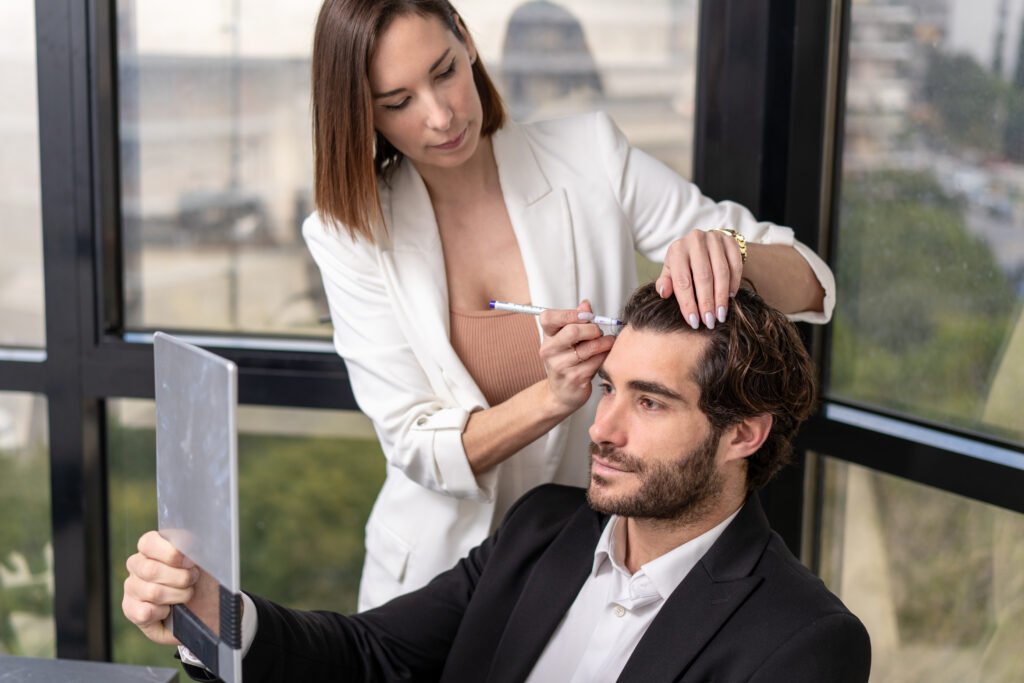
Creating customised hairlines based on individual characteristics
Will everyone receive the same type of hairline design?
Absolutely not. Every client presents uniquely different facial structures. Hence, customization is necessary in order to produce successful results.
What elements are customized in a client’s treatment plan?
- Shape of the hairline
- Gradual transition in density
- Graft placement strategy
- Long term planning strategy
Why is personalization critical?
There is no standard way to treat all patients similarly. Therefore, providing a cookie cutter solution will rarely yield satisfactory aesthetic results. Personalization ensures that your treatment plan will work specifically for you.
Most common errors made during hairline design
What are the most common missteps made by specialists during hairline design?
- Artificial looking hairlines due to complete straightness
- Placing the hairline too low
- Too much frontal density
- Incorrect direction of growing hair
Why do these missteps occur?
Generally speaking, missteps happen because either outdated procedures were employed or the specialist lacks sufficient experience. Selecting an expert clinic is key to avoiding these types of mistakes.
How can clients avoid these mistakes?
Selecting qualified surgeons who specialize in newer methods such as direct fue and follow principles related to aesthetics will lead to significantly improved results.
Evolution of the hairline post procedural period
Do hairlines change after a surgical procedure?
Yes. Human hair goes through cycles of growth. Therefore, post-surgical changes evolve gradually.
What is the expected timeline for development?
- First month recovery phase
- Months 2 to 3 dormant phase
- Months 3 to 4 early regrowth
- Months 6 to 12 fully developed
Why must patience be practised?
Gradual regrowth strengthens and stabilises your results. Therefore, patience ensures that your outcome will be natural and long-lasting.
Identifying when a specialist has successfully created a natural-looking hairline
What defines success in creating a natural hairline?
- Seamless merging into surrounding hair
- Natural direction and angle
- Balanced density
- Harmony with facial structure
What should you look for in quality results?
Clinics that consistently produce natural-looking outcomes across multiple patients demonstrate high expertise and reliability.
Conclusion
What should you remember about designing a natural hairline?
Creating a natural male hairline requires precision, expertise, and artistic vision. It is not a one-size-fits-all process. Instead, it requires careful planning and individualised execution.
At Clinique de Monsieur, we combine advanced technology with medical expertise. By using Direct Fue, where the grafts are being implanted with the use of Choi implanter, we ensure natural growth, optimal density, and long-lasting results.
Why is choosing the right clinic essential?
Because the design determines the outcome. Therefore, selecting a clinic that prioritises personalisation and precision is critical.
How can you achieve the best possible outcome?
By working with experienced specialists and following a customised treatment plan, you can achieve a natural and undetectable result.
Are you ready to design your natural hairline?
Schedule your consultation today and receive a personalised treatment plan tailored to your unique needs with Clinique De Monsieur. Medical services are provided in collaboration with GM Clinic and performed by experienced doctors.