


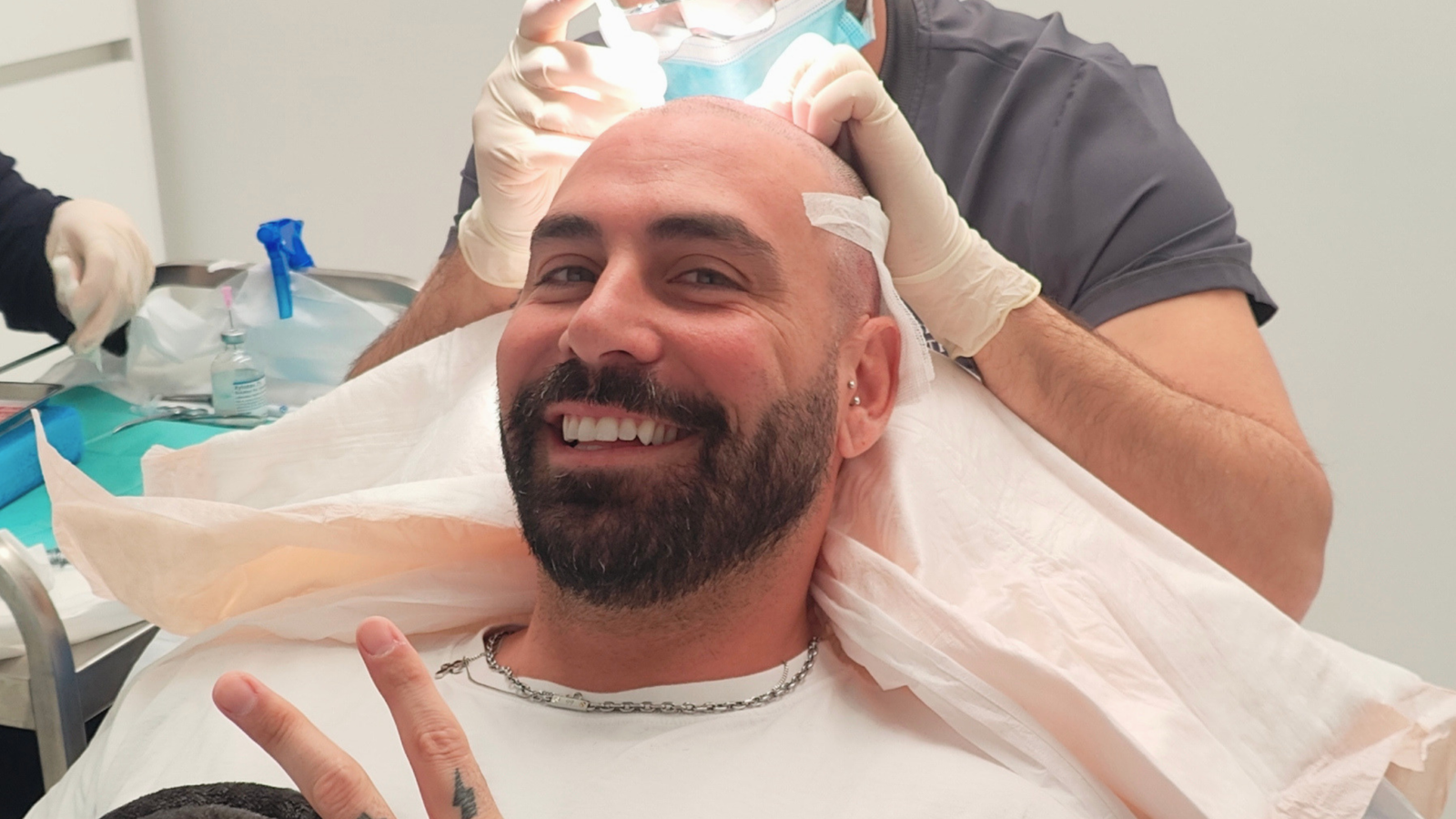
Why Is It Important to Calculate How Many Grafts You Will Need for a Hair Transplant?
When you are considering a hair transplant, you are probably wondering how many hair grafts you will need. After all, the number of grafts that will be placed plays a crucial role in density, coverage, and the final aesthetic result. However, the number of grafts is not the same for every patient. The extent of hair loss, the quality of the donor area, and the desired density significantly affect the required number.
Therefore, before proceeding with treatment, it is very important to understand the basics of graft calculation.
At Clinique de Monsieur, we specialize exclusively in the Direct FUE hair transplant method, which offers maximum precision, high graft survival rates, and natural results. In this article, we answer the most common questions about grafts, their calculation, and the expected results, so that you can make an informed and правиль decision.
What Is a Hair Graft and Why Is It So Important?
What is a hair graft?
A hair graft is a natural unit of hair, also known as a follicular unit. Usually, each graft contains one to four hairs, depending on your genetic characteristics.
During a Direct FUE hair transplant, each graft is removed from the donor area and implanted directly into areas with thinning or baldness, as grafts are being implanted with the use of the Choi Implanter. Thus, the procedure ensures precision and a natural growth pattern.
Why is the number of grafts important?
The number of grafts is critical because it affects:
- The coverage of areas with thinning or baldness
- The density of the final result
- The long-term preservation of the donor area
Therefore, choosing the correct number of grafts ensures a natural result without overharvesting.
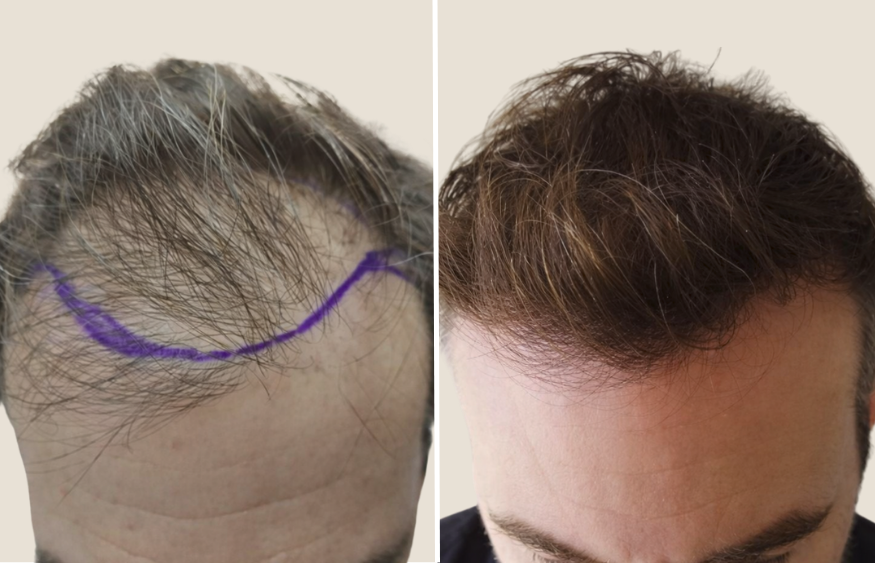
How Many Grafts Do I Need Depending on the Stage of Hair Loss?
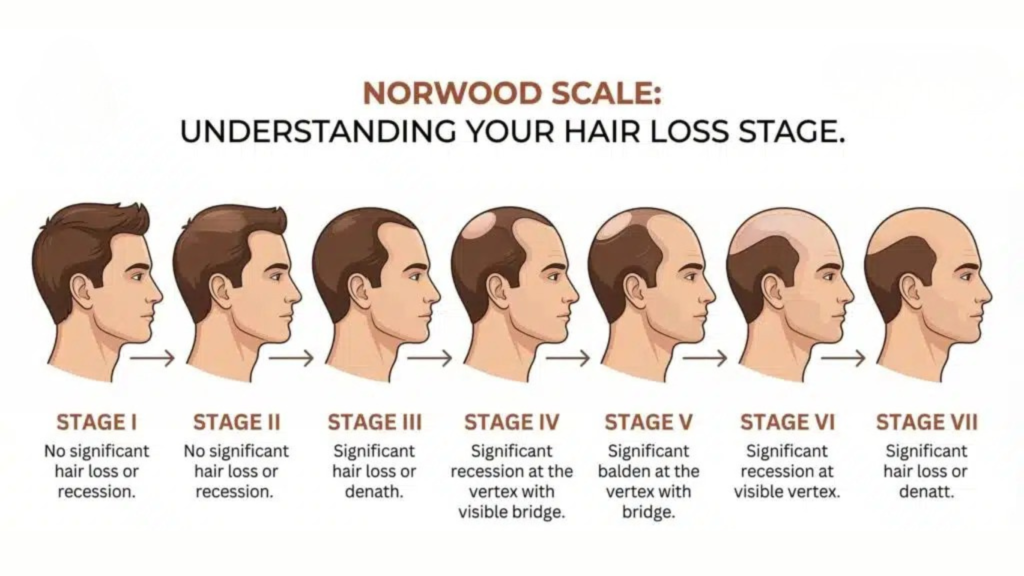
Does the degree of hair loss affect the number of grafts?
Yes, absolutely. In fact, the degree of hair loss is the most important factor in determining the number of grafts.
What are the typical graft ranges?
Mild Hair Loss (1,000 to 1,500 grafts)
- Early recession at the temples
- Slight thinning
- Improvement of the hairline
Moderate Hair Loss (1,500 to 3,000 grafts)
- Receding hairline
- Noticeable thinning in the frontal area
- Partial thinning at the crown
Advanced Hair Loss (3,000 to 5,000+ grafts)
- Extensive hair loss
- Hair loss in the frontal area and crown
- Full scalp restoration
However, thanks to the precision of the Direct FUE method, doctors can optimize graft placement. As a result, many patients achieve high density with fewer grafts.
What Factors Affect the Number of Grafts?
Why do two people with the same hair loss need different grafts?
Even if two individuals have a similar degree of hair loss, their hair characteristics, donor area, and goals differ. Therefore, each case must be evaluated individually.
What are the key factors?
Extent of Hair Loss
First, the size of the area is evaluated. Larger areas require more grafts.
Desired Density
Do you want a natural or very dense result? Higher density requires more grafts, but the donor area must be protected.
Donor Area Quality
The donor area must have strong follicles. Higher density means more available grafts.
Hair Thickness and Texture
Thicker or curly hair provides better coverage, therefore fewer grafts are needed.
Hair-to-Skin Contrast
High contrast requires more grafts. On the other hand, low contrast creates a fuller appearance.

Hairline Design
A properly designed hairline improves aesthetics. Therefore, correct placement is more important than the number.
Why Is Direct FUE the Most Advanced Method?
What makes Direct FUE different?
Direct FUE allows simultaneous extraction and implantation. Thus, grafts remain outside the body for a minimal amount of time.
What are the advantages?
- Higher graft survival
- Less trauma
- No scars
- Faster recovery
- Absolute control of placement
Does Direct FUE reduce the number of grafts?
Often, yes. Due to its precision, better density can be achieved with fewer grafts.
How Are Grafts Calculated?
What happens during the evaluation?
At the Clinique de Monsieur, a scientific process is followed.
What are the steps?
- Scalp analysis
- Donor area evaluation
- Density measurement
- Area mapping
- Hairline design
- Graft distribution
Can a Hair Transplant Be Done in Multiple Sessions?
Is one session enough?
Not always. In advanced cases, more sessions are needed.
How is it done?
- First session: frontal area
- Second session: crown
- Future: refinements
What Results Should I Expect?
How does the number affect results?
- 1,000 to 1,500: slight improvement
- 2,000 to 3,000: noticeable density
- 4,000+: major change
When do results appear?
- 3 to 4 months: initial growth
- 6 to 9 months: density
- 12 months: final result
Conclusion
So, how many grafts are needed for a hair transplant?
The answer depends on a combination of medical evaluation, aesthetic goals, and advanced technique.
However, with the Direct FUE method, you can achieve a natural, dense, and long-lasting hair transplant result.
At Clinique de Monsieur, we create personalized treatment plans based on each patient’s needs, aiming to maximize graft utilization while maintaining long-term hair health.
Book your appointment today and discover how many grafts you need for your hair transplant with advanced Direct FUE technology.